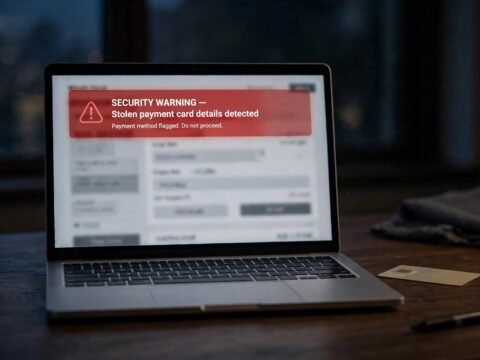
The FIFA data breach was confirmed on Wednesday 25 November 2026, when FIFA said hackers had accessed a limited set of personal and business information. Several gigabytes of internal files had been posted on the dark web five days earlier, on Friday 20 November. The leaked material includes photographs of passports, financial documents and sponsorship contracts linked to the 2026 World Cup. The group calling itself the Handsome Boy Hacking Club has claimed responsibility, but FIFA has not named an attacker.
What was in the FIFA leak?
The leak contains passport photographs, financial documents and sponsorship contracts linked to the 2026 World Cup, posted on the dark web on 20 November 2026. FIFA confirmed hackers accessed a limited set of personal and business information. FIFA has not said how many people were affected.
The details come from Le Temps, which reported on Monday 23 November that several gigabytes of files were stolen from FIFA and posted on the dark web. FIFA’s own confirmation came two days later, on Wednesday 25 November, when the governing body told The Record that hackers had accessed a limited set of personal and business information, and that it is working with relevant authorities and law enforcement to investigate.
FIFA has not said how many people were affected. The reported material is internal FIFA documents: passport photographs, financial documents, sponsorship contracts and commercial-rights papers.
- Treat a leaked passport photo as an identity-theft risk, and watch for accounts opened in your name.
- Check your credit reports for new accounts, and place a fraud alert if anything looks unfamiliar.
- Check bank and card statements for unfamiliar transactions, and report anything you do not recognise to your bank.
- Keep copies of your identity documents secure, and limit where you share passport photos online.
- Watch for phishing emails using your leaked details, and never click links in unexpected messages.
From ransom deadline to FIFA confirmation: the timeline
FIFA confirmed the breach on 25 November, five days after the files were posted on the dark web. The table below lays out the sequence, including LaLiga’s separate breach, eleven days before FIFA’s confirmation. The sequence shows the story developing in three stages: files posted on the dark web on 20 November, the leak confirmed in the press on 23 November, and FIFA’s own confirmation on 25 November.
| Date | What happened |
|---|---|
| Saturday 14 to Monday 16 November 2026 | LaLiga’s fan-services platform is breached. Personal data of registered users is extracted. LaLiga discloses it on 23 November. |
| Friday 20 November 2026 | Several gigabytes of FIFA internal files are posted on the dark web. The Handsome Boy Hacking Club reportedly submitted a ransom demand, which was not paid. |
| Monday 23 November 2026 | The Guardian and the New York Post report on the leaked World Cup commercial-rights documents. Le Temps confirms the dark-web publication, the passport photos, the financial documents and the sponsorship contracts, and the group’s claim. |
| Wednesday 25 November 2026 | FIFA confirms the breach to The Record: hackers accessed a limited set of personal and business information, and a law-enforcement investigation is under way. |
The eleven-day figure is TechReview’s own calculation from the dates in the reporting: eleven days passed between the LaLiga breach window opening on 14 November and FIFA’s confirmation on 25 November. The FIFA leak itself went from dark-web publication on 20 November to FIFA confirmation on 25 November, five days.
The 96-year plan the leak exposed
The leaked documents also shed light on FIFA president Gianni Infantino’s plan to open up the World Cup to investors by creating a commercial subsidiary, FIFA Forward Enterprise, to hold the World Cup’s commercial rights. The plan was abandoned under pressure, but the documents show how far it went.
Under the plan, the commercial rights would have passed to the new company for up to 96 years, renewed in licence periods of 12 years each. That is eight consecutive 12-year periods. The starting valuation was $20 billion, and FIFA would have kept 51% of the shares. A bonus pool of up to 5% of the company’s shares was reserved for management, which could have paid up to $50 million for each $1 billion added to the initial valuation. At the $20 billion starting valuation, that 5% pool would have been worth $1 billion before any value growth. A $250 million break fee was payable to Thrive Capital if FIFA broke the agreement or signed with a rival investor. The break fee is 1.25% of the $20 billion valuation. Thrive Capital, founded by Joshua Kushner, would have led the private investor group, and Infantino would have chaired the new company’s board.
An internal FIFA risk assessment dated Friday 17 July 2026 states: “This deal provides for FIFA to create a for-profit subsidiary which would have all the commercial rights for FIFA events transferred to it for commercial exploitation for the next 96 years.”
The plan did not survive. Infantino dropped the idea on Saturday 1 August 2026 after three continental confederations rejected it and European associations threatened a boycott. The proposal had been set for a board vote on Saturday 18 July at the Waldorf Astoria in New York, a day before the 2026 World Cup final. The Times first reported the plan on Tuesday 28 July 2026, and FIFA confirmed in July 2026 that Thrive Capital would lead the private investor group. FIFA’s spokesperson said the proposal would have needed approval from FIFA’s member associations and the FIFA Council, that the incentive plan was meant only for the new company’s own management, and that FIFA officials could not sit in those roles. FIFA denies that Infantino could have gained personally from the deal.
The plan is background revealed by the leak, not the breach itself. It was abandoned on 1 August 2026 and never took effect, so it should not be read as a live deal.
Who is the Handsome Boy Hacking Club?
The Handsome Boy Hacking Club has claimed responsibility for the incident. The group was founded in November 2026, according to Le Temps. When contacted, the group declined to give details of its motives or further information about its origins. It told Le Temps it had “no message to convey”: “We do not target organisations because of their identity or their values. We do not restrict ourselves to any particular geographical area or sector of activity when choosing our targets.”
The group reportedly submitted a ransom demand to FIFA, which was not paid. Its message to Le Temps was blunt: “It is a purely financial matter, and unfortunately FIFA did not pay.”
FIFA has not named an attacker. The Handsome Boy Hacking Club’s claim is the group’s own claim, reported by Le Temps. Until FIFA or law enforcement attributes the breach, the group’s role is a claim, not a confirmed attribution.
The group was not only active against FIFA. Earlier in November 2026, it attacked the US gun manufacturer Smith & Wesson, stealing nearly 50 GB of files, and claimed to have broken into the systems of Frontier Communications, a US telecoms operator, leaking several thousand internal documents. Both of its other November targets are American companies.
FIFA and LaLiga: two football bodies hit in eleven days
FIFA is not the only football body breached this month. LaLiga, Spain’s top football league, confirmed on 23 November that hackers had stolen personal data from its fan-services platform in an intrusion between 14 and 16 November. The two incidents share a sport and an eleven-day stretch, but not a victim or a kind of data. No group has claimed the LaLiga breach, while the Handsome Boy Hacking Club claims the FIFA one.
| LaLiga | FIFA | |
|---|---|---|
| When it happened | Intrusion 14 to 16 November 2026 | Files posted 20 November 2026 |
| Disclosed or confirmed | 23 November 2026, by LaLiga statement | 25 November 2026, by FIFA statement to The Record |
| Data taken | Personal data of users registered for LaLiga’s fan-services platform | Passport photos, financial documents, sponsorship contracts, internal commercial-rights plan papers |
| Attacker | None named; no group claimed it | Handsome Boy Hacking Club claims it; FIFA has not named an attacker |
| Count disclosed | No number given | No number given; FIFA calls it a “limited set” |
| Regulator or police | Reported to the Spanish data-protection authority and the Spanish National Police cybercrime unit | “Working with relevant authorities and law enforcement” |
Our analysis: the comparison shows how different two breaches in the same sport can be. LaLiga’s is a fan-data breach with no attacker named. FIFA’s is an internal-documents breach with a group claiming it and an abandoned commercial-rights plan inside the leaked papers. The one thing they share is the silence around scale: neither body has disclosed how many people were affected.
FIFA has been hit before. In 2017, US justice authorities and the FBI established that Russian intelligence was behind a cyberattack that exposed a list of positive doping tests carried out on footballers. In 2018, FIFA was the target of another cyberattack.
What to watch next
Five open questions will decide how this story develops:
- Whether FIFA names the people whose passport photographs were leaked, and whether it notifies them directly.
- Whether FIFA or law enforcement names an attacker, and whether the Handsome Boy Hacking Club’s claim is confirmed or contradicted.
- Whether more documents surface from the several gigabytes posted on 20 November, and what they reveal about who was affected.
- Whether the group strikes again. It hit three organisations in November, two of them American companies, and it says it does not restrict itself by geography or sector.
- Whether the abandoned 96-year commercial-rights plan resurfaces in any form, and whether FIFA’s member associations demand a fuller account of it.