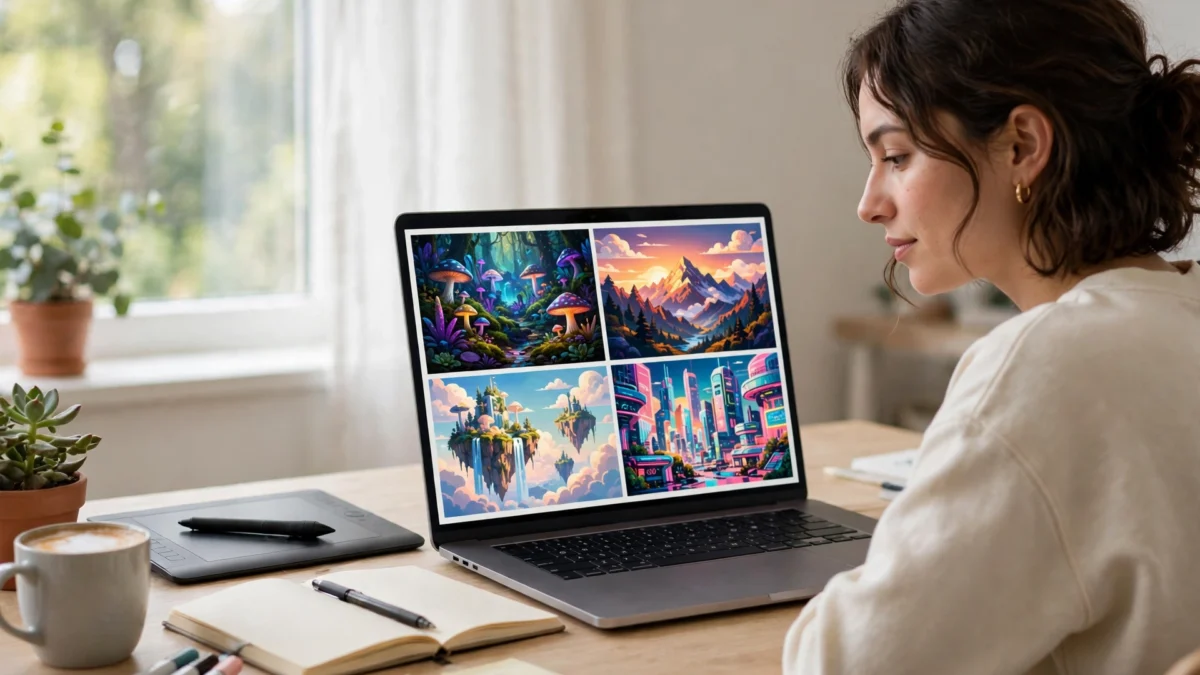
OpenAI announced on October 5 that it will start testing visual ads inside ChatGPT’s image generator later this month. If you’re in the US and on the Free or Go plan, you’ll soon see product images pop up while you wait for your image to generate. The ads will be labeled, kept separate from your image, and, OpenAI says, won’t influence ChatGPT’s answers.
This isn’t OpenAI’s first ad experiment. The company has been running ads in ChatGPT since February, starting in the US and expanding outward through the year. But the image generator is one of the most heavily used surfaces it has monetized yet, and with ChatGPT now reaching 1.2 billion people a week, per OpenAI, the test’s potential reach is enormous.
What the ads look like
The format is built around a dead-time problem: generating an image takes seconds, and that loading screen was empty inventory. Now, while you wait, you’ll see what OpenAI describes as product inspiration, product usage, or “the experiences they make possible.” OpenAI’s own example shows a grocery brand’s product images with a Learn more button on mobile, not a banner slapped on the page. The announcement doesn’t publish format specs, so the exact shape isn’t settled.
Two details matter. First, the ads are labeled as advertising and visually separated from the image you asked for. Second, OpenAI repeats its standing line: advertising does not influence the answers ChatGPT provides. Whether you believe the second claim depends on how much you trust the company selling the ads to grade its own separation.
Who sees them, and who doesn’t
Only two tiers see the visual ads: Free and Go. Everyone else, Plus ($20 a month), Pro, Business, Enterprise, and Education, doesn’t. That rule comes from OpenAI’s February ads announcement, which kept paid tiers ad-free, and the October post doesn’t change it.
This is the whole ballgame for the article’s real question. OpenAI has drawn a clean line: $20 a month buys you out of the ad business entirely. The Go plan at $8 a month does not.
Why OpenAI needs the money
Serving 1.2 billion weekly users is ruinously expensive. OpenAI first disclosed that number at its DevDay on September 29, and the October announcement repeats it. Ads are the obvious answer to the free-tier economics problem: somebody has to pay for all that inference, and if it isn’t the user, it’s the advertiser.
OpenAI said on August 31 that ChatGPT Ads had hit a $1 billion annualized revenue run rate in under 200 days, with tens of thousands of advertisers and availability in more than 40 countries. The company is reportedly targeting $2.5 billion in ad revenue this year. A run rate isn’t booked revenue, but the direction is unmistakable. Advertising is becoming a core revenue line, not an experiment.
Alongside the format, OpenAI is building the plumbing advertisers expect: conversion-data integrations with Hightouch, Tealium, and LiveRamp, attribution partners including AppsFlyer and Adjust, and brand-suitability pilots with DoubleVerify and Integral Ad Science. The company stresses these partners don’t get access to private conversations. That’s the sentence doing the most work in the announcement.
The privacy promises, graded
OpenAI makes three privacy claims worth examining separately. One: ads don’t influence answers. That’s a policy statement, not a technical guarantee, and it’s only as strong as your trust in OpenAI. Two: measurement partners get aggregate data, not your conversations. That’s concrete and checkable. Three: ads stay out of emotionally vulnerable or otherwise unsuitable contexts. The October post makes that commitment in general terms; the specifics, no ads for under-18s, none near health, mental health, or politics, come from OpenAI’s February advertising principles, which this announcement doesn’t revisit. That’s the most meaningful guardrail here, and also the hardest to audit from outside.
None of this is verifiable by you or me today. Worth saying plainly: we’re taking the ad seller’s word on ad separation.
So should you pay $20?
There’s a third option OpenAI doesn’t advertise loudly. Free users can switch to an Ads-Free experience in Settings under Ads controls, no payment required. The catch is steep: fewer daily messages, and no access to some tools. Image generation is one of them.
Read that again in the context of this story. The free escape hatch from ads turns off the exact feature these ads were built around. If you generate images on the free tier, you have two real choices, not three: see the ads, or pay. Go subscribers don’t even get the opt-out. OpenAI’s Help Center is explicit: Ads-Free is a Free-plan option.
So the $20 question narrows. If you generate images regularly and you’re on Free or Go, Plus is the only way to keep the feature and lose the ads.
Whether that’s worth it depends on one thing: how much you use image generation. If you generate images daily, you’re the exact user this ad format was built around, and $20 buys back a clean experience plus everything else Plus includes. If you mostly chat and rarely generate images, you’ll barely notice the test exists.

My take: don’t upgrade preemptively. The test starts later this month with a small advertiser group. See how intrusive it actually is first. The ads are labeled and separated by design; if they stay that way, most free users will scroll past them the way they scroll past everything else. Pay the $20 when the ads annoy you, not when OpenAI announces them.
What’s still unknown
One more wrinkle, reported September 10: OpenAI stopped accepting ads from competing image and audio generators. Adobe’s Firefly lost access despite being in the February pilot, Adobe’s media chief confirmed. Selling ads on the image-generator surface while barring rival image generators from buying them is its own story.
OpenAI hasn’t said exactly when in October the test starts, hasn’t named a single advertiser in the pilot, and hasn’t said what comes after the US test. The announcement’s partner success stats are OpenAI-published, not independent. And the biggest unanswered question: if the test works, how long before ads creep beyond the loading screen?
That’s the pattern to watch. Every ad business starts with “clearly labeled and separate.” The question is always what the second format looks like.
Corrected Oct 9, 2026: added the Ads-Free opt-out detail, corrected the $1B figures to OpenAI’s first-party claim, fixed attribution on privacy specifics and ad format description.