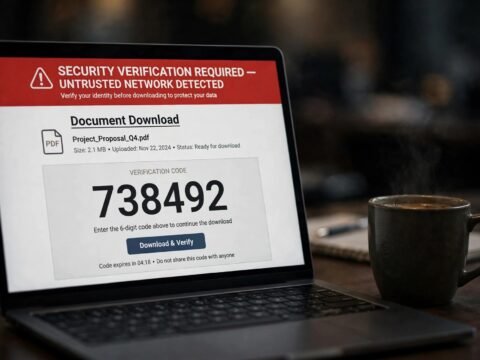
The myColorado app has been offline since Thursday 19 November. The state found the cybersecurity incident late on Wednesday 18 November, when an unauthorized user accessed platform data, and shut the app down. It now says data belonging to 50,000 to 150,000 people may have been affected. The incident, described in some coverage as the myColorado data breach, has kept the app offline with no date for its return, and Thanksgiving is on Thursday 26 November.
Your digital licence is gone for Thanksgiving
myColorado is Colorado’s official digital driver’s licence and state ID app, run by the Governor’s Office of Information Technology. It also carries a mobile driver’s licence, known as an mDL, and the state is working to make it a single sign-in for state services. The state’s chief information officer, Sarah Tuneberg, told StateTech magazine on 18 November, the day before the outage, that more than two million Coloradans hold myColorado accounts, about 40 percent of the state’s adult population.
The app is accepted as a valid form of ID at bars and restaurants, and it has expanded to Denver International Airport. Its mobile driver’s licence also works at TSA checkpoints in more than 250 airports, according to the state’s own store listing. That reach is what makes the outage matter in Thanksgiving week: travellers who planned to show a phone at the airport may need the physical card instead.
With the app down, the digital ID is mostly out of reach. Some users can still display a digital ID the app cached on their phone in airplane mode, and the state’s FAQ says an mDL can be added to another DMV-approved digital wallet, but the state tells travellers to carry the physical card. Coloradans who rely on the app to prove who they are may need to carry a physical driver’s licence or state ID card until service returns. Colorado law requires carrying the physical ID at all times, even when using a digital credential.
Four days from “outage” to “cybersecurity incident”
The state found the incident late on Wednesday 18 November, when an unauthorized user accessed platform data, and shut the app down. The app was reported down just before noon on Thursday 19 November. FOX31 Denver reported that the app was down and that a team was working to restore it as soon as possible. No cause was given.
The fuller picture arrived on Monday 23 November, when 9NEWS reported that the app remains offline after a cybersecurity incident. State officials told 9NEWS that data belonging to 50,000 to 150,000 people may have been affected, and that there was no timeline for restoring the app.
The first public explanation beyond “outage” came on Monday, when 9NEWS reported a cybersecurity incident.
| Date | What happened |
|---|---|
| Wednesday 18 November | State finds the incident late at night; an unauthorized user had accessed platform data; the state shuts the app down. |
| Thursday 19 November | App reported down just before noon. FOX31 reports a team is working to restore it; no cause is given. |
| Monday 23 November | 9NEWS reports the app remains offline after a cybersecurity incident. Data of 50,000 to 150,000 people may be affected. No restoration timeline. |
| Thursday 26 November | Thanksgiving Day. |
What the state has said, and what it has not
What the state has confirmed is short. A cybersecurity incident happened: an unauthorized user accessed platform data, found late on Wednesday 18 November, and the state shut the app down. The state told 9NEWS that data belonging to 50,000 to 150,000 people may have been affected, and its FAQ gives the same estimate. There is no timeline for restoring the app. The incident is described in some coverage as the myColorado data breach, but the state calls it a cybersecurity incident: it confirms an unauthorized user accessed platform data, and has not said what data was taken.
What the state has not said, in the sources reviewed, is longer. It has not named the kinds of data involved, so no names, dates of birth, driver’s licence numbers, addresses or Social Security numbers have been confirmed as affected. It has not said whether data was actually taken: “may have been affected” is an estimate of possible impact, not a confirmation of theft. It has not named an attacker or a cause, and no group has claimed the incident in reporting so far. The state says it has no reason to believe the incident is part of a bigger attack. It has not said when the app will return, or whether it will offer credit monitoring. It has said affected residents will be notified directly once the investigation concludes.
The Governor’s Office of Information Technology has published a formal FAQ on myColorado.gov, updated 24 November, covering the discovery, the shutdown, the 50,000 to 150,000 estimate, the notification plan and the travel advice. The confirmation first reached the public through 9NEWS reporting on Monday, not through a state announcement.
The 50,000 to 150,000 range is an estimate, not a count. The headline figure is the top of the range; the bottom of the range is a third of it.
How big is 150,000?
Against the app’s two million-plus accounts, 50,000 to 150,000 people is roughly 2.5 to 7.5 percent. That is a small slice of the user base for data impact.
But the outage reaches everyone who needs to sign in. The app’s two million-plus account holders cannot reach their digital ID through the app while the service is down, whether or not their data was touched, though some can still show a digital ID the app cached on their phone in airplane mode, and an mDL can be added to another DMV-approved digital wallet. The service impact is far wider than the data impact, and that is the point the top-line figure misses.
The scale is also visible in the state’s own numbers. More than one million Android installs are listed on Google Play, and the state’s chief information officer puts total accounts at more than two million, about 40 percent of Colorado’s adult population. The app has been offline since Thursday, so a flagship state identity service has been down for five calendar days by Monday, even if the data impact turns out to sit at the low end of the range.
Colorado’s second state-system failure in three months
This is the second failure of a Colorado state digital service in about three months, and the two have different causes.
As reported on 31 August, the Secretary of State’s office confirmed the previous week that more than 130,000 confidential voters had their personal information publicly accessible for more than a week after an office error while updating voter registration software. Fifty-nine voter profiles were accessed between 14 August and late August. The office said the error was its own.
On 19 November, myColorado went down. The two incidents hit different systems for different reasons: an office error, and a cybersecurity incident the state has not yet explained. Two public failures in about three months, and the second has kept the state’s digital ID offline since Thursday.
What should I do if I use myColorado?
Carry your physical driver’s licence or state ID until the app returns. Some users can still show a cached digital ID in airplane mode. Watch for a notice from the state about whether your data was affected, and treat any message about the outage as suspicious until the state confirms it through official channels.
- Carry your physical driver’s licence or state ID card everywhere until the app is back online.
- Check the app before travelling, and keep the physical card ready for Denver airport security.
- Watch for a notice from the state saying whether your data was affected, and keep it.
- Freeze your credit with Equifax, Experian and TransUnion if the state confirms licence numbers leaked.
- Report any suspicious message about myColorado to the state, and do not click links in it.
What to watch next
- Whether the app returns during the Thanksgiving holiday week.
- Whether the state names the kinds of data involved and narrows the 50,000 to 150,000 range.
- Whether affected residents are offered credit monitoring.
- Whether the state sets a restoration date.
- Whether any group claims the incident.