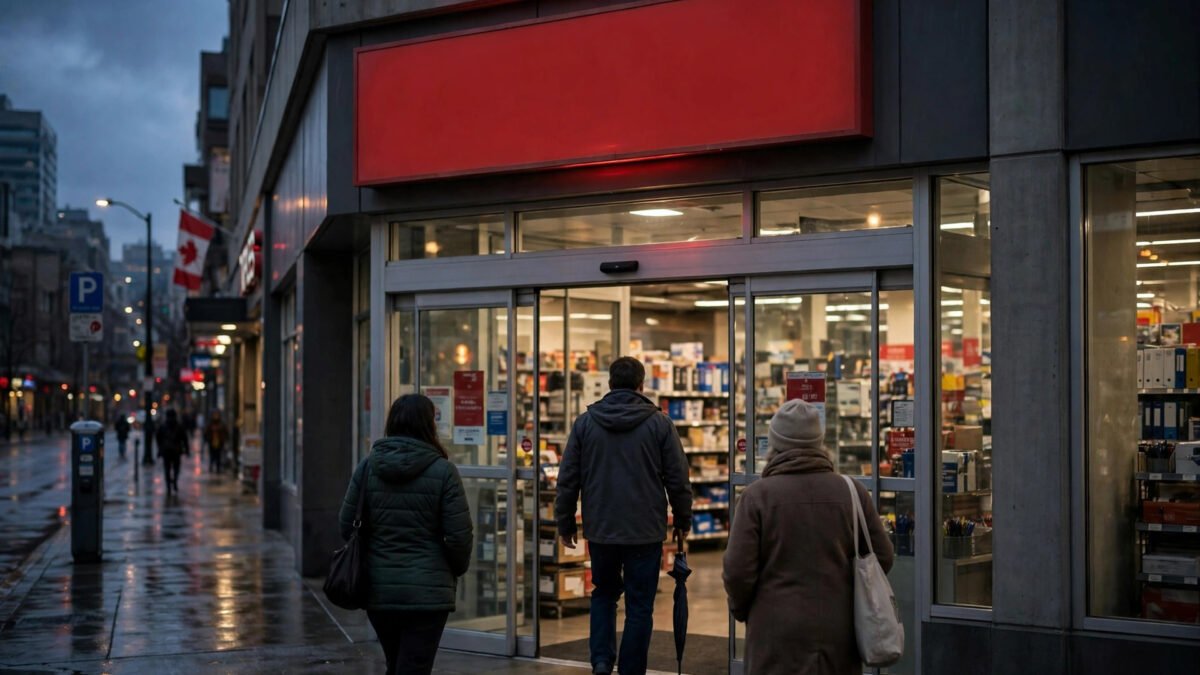
Staples Canada has told customers that an unknown party got into its staplesprint.ca print website and accessed their personal information, including names, home addresses and encrypted passwords. The access ran from 1 to 5 November. Customers were told on 20 November, 15 days after the access ended.
Staples says no financial information was exposed, and it believes the risk to customers is low. It has initiated a password reset for potentially impacted customers, to take effect when they next log in to staples.ca. But the company has not said how many customers were affected, how the attacker got in, or when it found the intrusion. Those are the questions that decide how seriously to take this breach, and none of them has an answer yet.
What was taken
The customer notification, signed by Adrian Lang, Staples Canada’s chief people and legal officer, lists six categories of personal information that were accessed. Global News reported the letter’s contents on 20 November.
| Data accessed | What it means for you |
|---|---|
| Name | Identifies you in phishing messages that use your real name. |
| Email address | The channel for phishing and password-reset scams. |
| Shipping address | The address on the order, which may be a home or a workplace. |
| Billing address | The billing address on file for the order. |
| Order summary | The order summary, which could help a scam email look genuine. |
| Encrypted password | Your Staples password, in encrypted form. The algorithm is not stated. |
That is six fields taken and zero financial fields. “No financial information was exposed,” Lang said. The split decides the practical advice: password reuse and phishing vigilance matter more here than cancelling cards. The passwords were encrypted, which reduces the immediate exposure compared with plaintext passwords, but the protection cannot be assessed without knowing the encryption method. If you reused that password anywhere else, change it there too.
What Staples has done so far
Staples “promptly excluded the threat actor from our system and secured all accounts,” Lang said. Customers who were potentially impacted will be prompted to reset their password when they next log in. The notification letter says Staples initiated a password reset upon next login to staples.ca for all potentially impacted customers, and the company says it continues to monitor the situation.
“While we believe the risk to you is low, we encourage you to regularly change passwords, use unique passwords for different websites, and remain vigilant about unsolicited emails that ask you to provide personal information,” Lang said. Staples said customers will be updated once the company learns more about the incident. The letter gives the contact points privacy@staples.ca and 1-888-STAPLES.
What Staples has not done is publish a public notice page or a victim count. CBC also reported the incident on 21 November, and the notification letter has been shared by customers on Facebook and Threads. CBC also obtained additional comments from a Staples spokesperson: the incident did not affect Staples’ other websites, and the company was conducting a full investigation and assessing the full scope of the incident. The customer notification remains the main detailed public account of the affected data.
The 15-day gap
| When | What happened |
|---|---|
| 1–5 Nov 2026 | Unknown party has unauthorised access to staplesprint.ca and accesses customer personal information. |
| 7 Nov 2026 | The ransomware group N0n posts an unverified leak-site claim naming Staples Inc (US), a different company and a different matter. |
| 20 Nov 2026 | Staples Canada notifies customers and Global News publishes, 15 days after the access window ended. |
The gap between the end of the intrusion and the customer notification is the sharpest consumer question in this story. Nineteen days passed between the start of the access and the notification. Staples has not said when it discovered the intrusion, so it is not possible to say how much of that gap was detection and how much was notification. The article states the dates and asks the question; it does not answer it.
This is not the Staples breach you may have read about
On 7 November, two days after the confirmed access window closed, the ransomware group N0n listed “Staples Inc and SBD Inc” on its leak site, claiming 381,964 records from a single daily file, including per-product profit-margin data and unit sales and revenue data for 64,041 products, shopper activity logs with IP addresses, search terms and device information, chat transcripts including a callback phone number, a staff directory with names and email addresses for close to 200 employees, and a pasted table described as containing 30 Social Security numbers with dates of birth. A leak-site listing is an allegation, not independent confirmation that an attack took place or that data was stolen.
That claim is unverified. Staples Inc (US) has not confirmed any incident, and no independent verification of it has been published. A law-firm investigation notice from 10 November also describes the claim as unverified. It names a different company entity, Staples Inc in the United States, and different data from the confirmed Staples Canada breach. There is no evidence linking the two, and they should not be presented as one incident. Do not use the N0n figures as facts about the Staples Canada breach.
What should staplesprint.ca customers do now?
Reset your Staples password now, and change it anywhere else you used the same one. Watch for phishing emails that use your real name, address or order details, since those were taken. No payment data was exposed, so cancelling cards is not the priority.
- Reset your Staples password now, and choose a new password you do not use anywhere else.
- Change that password on every other website where you have reused it, starting with email.
- Treat unexpected emails about your Staples orders as phishing until you verify the sender independently.
- Check your inbox for password-reset messages you did not request, and report any you find.
- Contact Staples at privacy@staples.ca or 1-888-STAPLES if you have questions about your own account details.
- Watch for Staples updates in your inbox, and do not click links in unexpected messages.
The regulator’s earlier finding on Staples Canada
Canada’s federal privacy regulator has found a problem at Staples Canada before. In a report dated 1 December 2025, announced in a news release on 13 January 2026, the Office of the Privacy Commissioner of Canada said its investigation had found that Staples Canada did not fully remove users’ personal information from returned laptops that it later resold. OPC investigators examined laptops returned to four Ontario stores and found personal information (names, email addresses, Windows account usernames, email fragments, document titles and partial images of faces) on 23 per cent of the devices analysed.
The commissioner had audited Staples over similar concerns in 2011, and the new investigation found that some of the same problems persisted 15 years later. Staples agreed to develop clear wiping standards, improve staff training and arrange annual independent spot checks on returned devices for three years, and to demonstrate compliance within nine months of the report, a period that had already ended by November 2026. The matter was found well-founded and conditionally resolved.
That was a different matter (device resale, not a website breach), and it is not evidence about this breach. But two unrelated privacy failures at the same retailer is a legitimate pattern question, and it is one the regulator’s own record raises.
What to watch next
How many customers were affected; whether Staples publishes a public notice page or a victim count; whether the Office of the Privacy Commissioner or any regulator comments on the November website incident specifically; whether any threat actor claims responsibility or publishes data; and whether the N0n claim turns out to be connected to anything at all, which is currently unproven.
This article will be updated as Staples confirms more, or as further reporting emerges about the breach.