
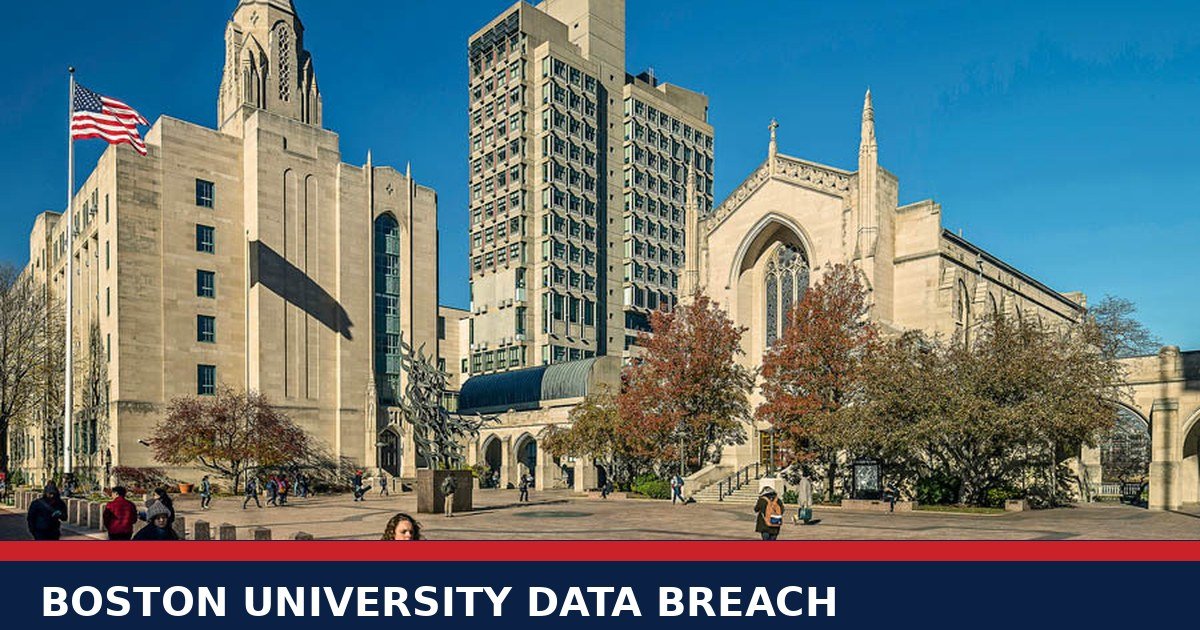
Boston University confirmed on 10 November 2026 that someone had unauthorised access to records in its student information system. Five alumni then filed three proposed class-action lawsuits against the university on 11 and 12 November, alleging it failed to protect their personal information. The Boston University data breach is now a confirmed incident with an unconfirmed scope: the hacker claims to have taken more than eight gigabytes of data, but BU has not said how much was taken, what was in it, or how many people are affected.
What Boston University confirmed
BU’s statement, titled “IS&T Student System Update” and posted on its TechWeb site on 10 November, says the university “recently became aware of an incident involving unauthorized access to records in the University’s student information system, which is managed by a third-party contractor.” It said it acted immediately to secure its IT environment, investigate, and take steps to prevent similar events. It also said there is “no evidence of unauthorized access or compromise to any other BU system.” The university promised to notify the individuals whose personal information was involved, in accordance with applicable law, and said it would continue working with external security experts.
What the statement does not say is just as important. It does not name the third-party contractor. It does not say what data was taken, how much, or how many people are affected. It does not describe how the access happened, or whether the university received a ransom demand. The Daily Free Press, BU’s independent student newspaper, reported on 16 November that BU “has not publicly stated the extent of the breach or what specific information was compromised.”
What the Boston University data breach lawsuits allege
The lawsuits came fast. Five Boston University alumni filed three separate proposed class-action lawsuits against the university on 11 and 12 November, in the U.S. District Court for the District of Massachusetts, according to The Daily Free Press. The plaintiffs are Charles Amar, Nikolay Kolev, Sarah Potwin, Arthur Capone and Richard Khazanov. They allege BU failed to implement adequate cybersecurity safeguards, potentially exposing current and former students, employees and applicants to identity theft and fraud.
One of the complaints puts the stakes in plain terms. Arthur Capone’s complaint states: “A student can change a password. He cannot replace his date of birth or the academic history reflected in his transcript.” The plaintiffs are seeking monetary damages and court-ordered improvements to the university’s data security practices.
The timing matters. A class action lawsuit alleging student information “may have been accessed and taken during a cybersecurity incident” was filed before BU’s 10 November announcement. The announcement followed the filing, according to the law firm Ahdoot & Wolfson, which is investigating a possible class action against the Trustees of Boston University. Data Privacy Justice published its own investigation page on 10 November.
The claimed scope: 8 GB, 6.8 GB, and a file table that adds up to 13.9 million rows
The numbers in circulation come from unverified listings, not from BU: the 8 GB and two-million-rows figures from the hacker’s 1 November post, the 6.8 GB figure from a separate BreachForums listing, and the file-table figures from Breach House.
A second, unverified figure complicates the picture. A BreachForums listing on 6 November offered a 6.8 gigabyte archive labelled Boston University. The 6.8 GB figure is 1.2 GB, or 15%, smaller than the 8 GB claim, and no source has established whether the two listings are the same archive measured differently or two different dumps.
Our own calculation: a listing tracked by Breach House, attributed to an actor called Database World ROC and discovered on 3 November, breaks the archive down into 11 named files. Adding up the row counts in that file table gives 13,891,662 rows, or about 13.9 million. The listing’s largest single file, PERSON_PHONE.csv, holds 2,221,947 rows, or 16% of the listing’s own file table. That figure is close to the hacker’s “over two million rows” claim, but no source connects the two: the claim and the listing are separate, unverified records. The listing describes a second enrolment file, ENROLL_STUDENT22.csv, as the same as ENROLL_STUDENT.csv, though the two have different row counts. Excluding it as a possible duplicate gives 12,707,824 rows, or about 12.7 million, but that is a conditional figure, not a confirmed unique-row total. Either way, these are file-row counts, not a confirmed count of affected individuals. The listing also notes the compressed download is 413 megabytes. And the listing itself is unverified: Breach House records what leak operators publish, and no independent source has confirmed these files are BU production data.
The disclosure took nine days, and a lawsuit came first
The sequence is the story. A theft claim surfaced on X on 1 November. A listing appeared on 3 November. A second forum listing followed on 6 November. A class action lawsuit was filed before BU’s 10 November announcement. And only then, on 10 November, nine days after the first public claim, did BU publicly acknowledge unauthorised access. The three alumni lawsuits were filed on 11 and 12 November, ten and eleven days after the first claim. BU’s own statement never mentions the forum claims or the lawsuit. The university confirmed the incident after a lawsuit had already been filed.
That order is unusual. The public claim came first, the legal action second, and the university’s confirmation third. It does not prove BU knew about the incident earlier. The university says it recently became aware of it. But it does mean the hacker’s claim and a lawsuit filing preceded BU’s public announcement.
What should I do if I attended Boston University?
BU has promised to notify the people whose information was involved, but it has not said when. The hacker’s post alleged names, addresses, Social Security numbers, academic records, payment information and passport and visa details were included, but BU has not confirmed any of it. Until then, freeze your credit and watch for BU’s notice.
- Freeze your credit at Equifax, Experian and TransUnion, or at minimum place a fraud alert, to make it harder for anyone to open new accounts in your name.
- Watch for a notice from BU, and read it carefully when it arrives.
- Change your BU password and any password you reused elsewhere, as a precaution, and turn on two-factor authentication where it is available.
- Check your bank and card statements for charges you do not recognise, and report anything unfamiliar to your bank.
- Be sceptical of emails or calls claiming to be from BU about the breach, and verify them through BU’s own website before clicking anything.
These steps are general precautions, not instructions from BU.
What to watch next
Three things are worth watching. First, BU’s individual notifications. The first notice letter, or a BU update with an affected count, would convert the claimed scope into a confirmed one. Second, a Massachusetts Attorney General filing for this incident, which could give an independent count and data-type list. Third, whether a tier-one outlet or BU itself confirms the 8 GB or 6.8 GB figure, or names the third-party contractor. Until then, the confirmed facts in the Boston University data breach are narrow: unauthorised access to a student system, a pre-announcement lawsuit, and three proposed class-action lawsuits filed by five alumni. The claimed scope and contents of the alleged stolen data remain unverified.
This is a separate incident from BU’s earlier breaches, including the 2024 Framingham Heart Study server breach, which affected 15,448 participants, and the 2020 Blackbaud ransomware attack. Neither is connected to the November 2026 incident.


