
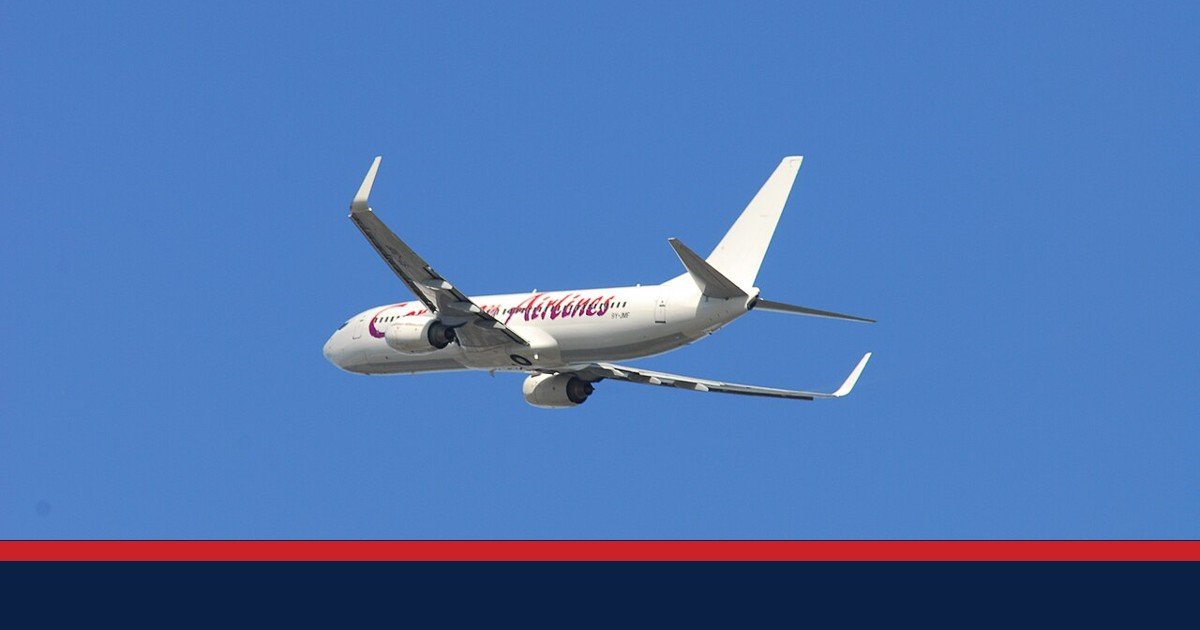
Caribbean Airlines confirmed on Sunday 15 November 2026 that booking data belonging to its passengers was accessed without authorisation through Amadeus, its third-party reservation-system provider. A company official said no payment card data was exposed, and the airline has not said how many passengers were affected. The Caribbean Airlines data breach is the latest airline disclosure in a supplier incident that has now reached carriers across Asia, Europe and the Caribbean.
The airline was told about the breach on Thursday 5 November, and it emailed affected passengers on Friday 13 November, eight days later. Its public statement came two days after that, on Sunday 15 November. That is the date the airline says it was told, not necessarily the date the access happened. The gap between being informed and going public was ten days.
What happened in the Caribbean Airlines data breach
Caribbean Airlines said in a statement on Sunday that Amadeus, its reservations service provider, had told it an unauthorised party exploited a vulnerability to gain access to passenger booking and reservation information, the Jamaica Gleaner reported. The airline said its main concern was notifying affected customers, and that the process was still under way. It apologised “to its customers for the concern and inconvenience caused by this incident.”
The email Caribbean Airlines sent to affected passengers on 13 November, quoted in full by the Trinidad Tribune, says the information that may have been affected includes a passenger’s name, booking reference, travel itinerary, contact information and other information in the booking record. The email adds that not every reservation record contains the same information, and that the airline does not yet have the information it needs to confirm the precise data elements for any individual passenger.
A company official confirmed to Guardian Media that the breach did occur, and said no payment card data was exposed. There was no word on how many customers were affected. Amadeus has reset the compromised credentials, tightened access controls and added monitoring, the email said. The Gleaner reported that Amadeus has fixed the vulnerability and strengthened its monitoring and detection.
Ten days from a quiet warning to a public statement
Caribbean Airlines emailed the passengers it had identified first, and spoke publicly second. Japan Airlines and Cathay Pacific both published their public notices on 30 October. The dates below are the ones the airline reported. The gaps are simple arithmetic between those dates, not a finding that anyone delayed: the sources give no internal timeline between notification and announcement, and the Tribune reported that Caribbean Airlines notified identified customers because data-protection laws where it operates required it.
| When | What happened |
|---|---|
| Thu 5 Nov 2026 | Caribbean Airlines is informed by Amadeus that an unauthorised party gained access to reservation information through a compromised system account |
| Fri 13 Nov 2026 | Caribbean Airlines emails the passengers it has identified, eight days after being informed |
| Sun 15 Nov 2026 | Caribbean Airlines confirms the breach in a public statement, ten days after being informed |
The wider incident runs further back. International reports cited by the Tribune put the period in which traces of unauthorised access to Amadeus reservation data were identified at 10 August 2023 to 23 September 2026, a span of 1,140 days. Publicly reported notifications include 20 October for Korean Air, 23 October for JAL and 28 October for Cathay Pacific. Amadeus issued a statement on the booking-display vulnerability in October 2026.
The Amadeus breach keeps adding airlines
Caribbean Airlines is the first Caribbean carrier to confirm it was caught in the Amadeus breach, and its disclosure came about three weeks after Korean Air and Asiana disclosed on 23 October. The airline itself named Japan Airlines, Singapore Airlines, Cathay Pacific, Finnair, Thai Airways, Korean Air and Qantas as fellow affected carriers. The table counts only what each airline disclosed, and the total is our own arithmetic.
| Airline | What it disclosed |
|---|---|
| SAS | 350,164 travellers, per Swedish broadcaster SVT |
| Finnair | About 116,000 reservations |
| Japan Airlines and Japan Transocean Air | About 92,000 customers, including about 2,000 with additional information potentially accessed, including passport numbers |
| Thai Airways | About 60,529 bookings |
| Cathay Pacific | About 53,000 bookings |
| Singapore Airlines | About 46,000 booking records |
| ANA | About 37,800 customers |
Added together, those seven disclosures come to 755,493. That is our arithmetic, not a company figure, and the units are mixed, so it is an indicative sum, not a total of affected people. Travellers, reservations, bookings, booking records and customers are counted differently, and Amadeus has not published a consolidated count in its public statement. The supplier total is still unknown while the per-airline disclosures keep arriving. Malaysia Airlines, Korean Air and Asiana have also confirmed they were caught in the incident, without giving a count. Qantas says it is working with Amadeus to establish the impact.
What should I do if I flew with Caribbean Airlines?
If you flew with Caribbean Airlines, check whether the airline emailed you: its message went to passengers whose bookings may have been affected. The airline says no card data was exposed, and no misuse is known yet. Stay alert for messages quoting your booking reference or itinerary, as that detail makes a flight-change message convincing.
- Watch for emails, texts or calls that quote your booking reference or itinerary and ask you to act.
- Do not share personal details or click links in a message unless you are sure the request is genuine.
- Check any flight change through the airline’s own website or app, not through a message link.
- Save the airline’s email and note which booking details it mentions, so you can spot a fake.
- Keep a copy of any suspicious message that quotes your booking and report it to the airline.
- Watch your inbox for a follow-up from the airline naming the precise data elements that were accessed.
The stay-alert warning comes from the airline’s own email, which tells passengers to stay alert for unexpected messages that reference their travel or booking information, and not to share personal information unless they are satisfied the request is legitimate.
What is confirmed, and what is not
Confirmed: an unauthorised party gained access to passenger booking and reservation information through Amadeus; the airline was informed on 5 November; affected passengers were emailed on 13 November; the breach was confirmed publicly on 15 November; no payment card data was accessed, according to preliminary Amadeus data; Amadeus reset the compromised credentials and fixed the vulnerability; no misuse is known yet.
Not confirmed: how many Caribbean Airlines passengers were affected; which data elements were accessed for any individual passenger; whether passport numbers or travel-document numbers were exposed for Caribbean Airlines passengers; whether any specific customer’s data was copied or downloaded, which the email does not clarify; who the attacker was; and whether the exposed data has been published, sold or used for fraud. The airline’s email says the precise data elements are not yet confirmed, and that it is not aware of any evidence of misuse so far.
The TSTT breach of October 2023, which the Tribune mentions as local context, is a separate reported event involving a different organisation, with no connection identified in the sources cited. And the 755,493 figure is not a Caribbean Airlines number. It is the sum of seven other airlines’ disclosures, in mixed units, and Caribbean Airlines has disclosed no count of its own.
What to watch next
Three questions are still open in the Caribbean Airlines data breach. First, whether the airline discloses a count, and when. Second, whether passport or travel-document numbers were touched for its passengers. Japan Airlines said about 2,000 customers had additional information potentially accessed, including passport numbers, and Singapore Airlines reported about 620 records that may also have included additional information, including travel-document details. The airline’s email did not say whether passport or travel-document numbers were among the accessed fields. Third, whether Amadeus gives a total for the whole incident. We track confirmed breaches with victim counts on our Data Breach Tracker, and this one has no count yet, so it does not appear there.


