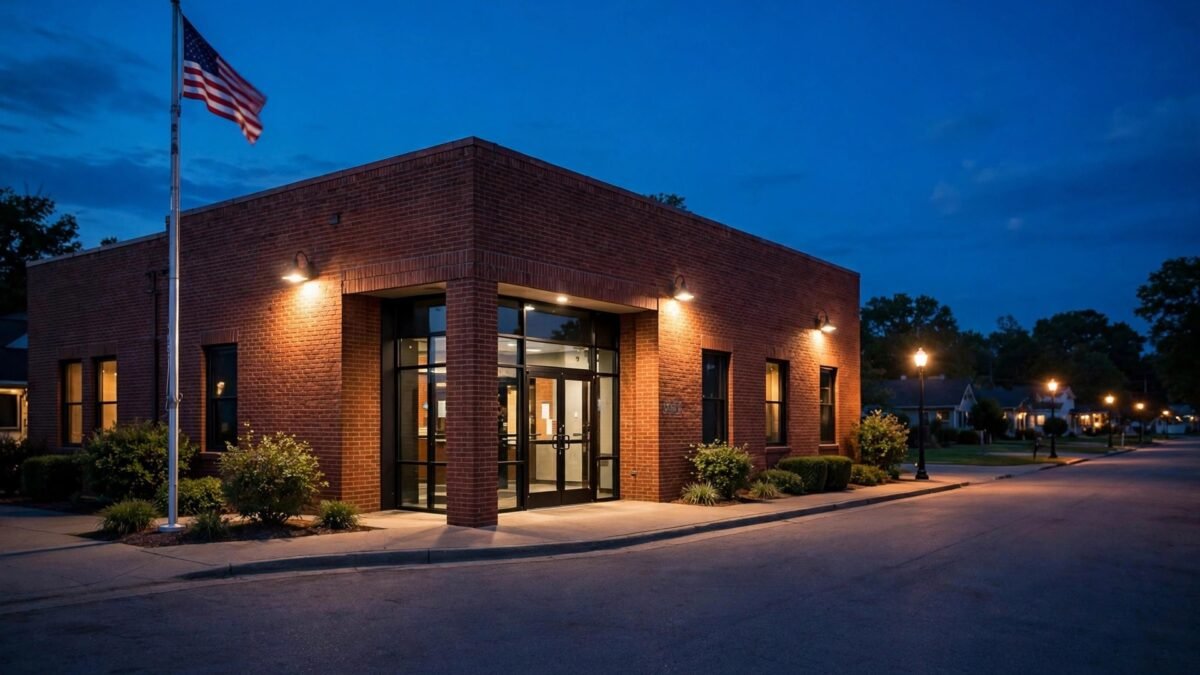
Cranston Police in Rhode Island took its network offline on Saturday 21 November after discovering unauthorised activity in a department database early that morning. The department calls it a suspected cyber intrusion, and that word, suspected, is doing a lot of work: no one has confirmed that anyone actually got into the database, no personal data has been confirmed exposed, and no attacker has been named. What is confirmed is that the network is down, the FBI has been notified, and the department says it will not pay a ransom to anyone trying to extort it.
The phones still work. The radios still work. Officers are still responding to calls as usual. That is the first thing residents need to know, and it is the reason this story is about a precaution, not a shutdown of policing. The Providence Focal, reporting on Sunday 22 November, carries the department’s account in full, and Dysruption Hub, citing WJAR’s Sunday report, corroborates it with three careful cautions of its own.
What happened on Saturday morning
Police discovered unauthorised activity early on Saturday morning in one of the department’s computer databases. The department took its network offline as a precaution to prevent further access while the investigation proceeds, and its IT team is working to restore systems. It notified Rhode Island State Police and shared information with the state police Computer Crimes Unit and the FBI.
The department emphasised that phone lines and radio communications were not affected and that officers continue to respond to calls for service as usual. It also said there is currently no indication that personally identifiable information was accessed or compromised. That is a current assessment, not a final all-clear: the investigation is ongoing, and officials have not released further details about the nature of the intrusion or who might be responsible.
Officials said they will not pay a ransom or provide compensation to anyone attempting to extort the department over the incident, and they are hopeful systems will be restored over the next several days with minimal data loss. Dysruption Hub adds the caution that matters here: the department’s prospective refusal to pay a ransom does not establish that a ransom was demanded, or that ransomware was involved. The same applies to the restoration hope: it does not confirm that records were lost, or that recovery is complete.
Three police stories in one week, at three different stages
Cranston is the middle rung of a ladder that ran across American local government in a single week. Three police and county incidents, three different stages of certainty, and the difference between them is the whole lesson in how to read the next police-breach headline.
| Incident | When | What is confirmed | What is not |
|---|---|---|---|
| Charleston County, South Carolina | Mon 16 Nov | Data was removed from county systems, confirmed by the county itself; SLED notified the same night and on-site; SLED deemed the incident criminal, per a release sent Thursday 19 Nov; day-to-day operations normal. | Whether personal or financial information was compromised; how many people are affected; who did it. |
| Cranston Police, Rhode Island | Sat 21 Nov | Unauthorised activity found in a police database; network taken offline as a precaution; FBI and State Police Computer Crimes Unit notified; phones and radios working; department will not pay a ransom. | Whether anyone actually accessed the database; whether any data was taken; whether a ransom was demanded; who did it. |
| Clarkesville Police, Georgia | Fri 20 Nov | Only that a Rhysida leak-site listing exists, recorded by at least five threat-intelligence trackers; the listing claims 606,210 files and 595.05 GB, for sale at 9 BTC to one buyer, with a countdown expiring around 27 Nov. | Everything in the listing: the city has not confirmed any of it, and no mainstream or local outlet had covered it when this article was written. Only the listing itself and three document thumbnails have been seen; the claimed files have not been released. |
The ladder is our own comparison, built from the sources for each incident, and no outlet has published it. Charleston County is the confirmed rung: the county said data was removed, and the South Carolina Law Enforcement Division deemed the incident criminal, according to WSSB Radio, which reported a county release sent on Thursday 19 November. Cranston is the suspected rung: the department found something wrong and acted on it, but has not confirmed a breach of the database. Clarkesville is the claimed rung: a ransomware group says it stole police data, and nothing has verified the claim. The Clarkesville row is included because it shows what an unverified claim looks like next to a confirmed one, and because the listing’s countdown, visible in a screenshot shared by CTI Updates, expires around 27 November, when the claim will either be backed by published data or left standing as a claim. The three rows are not three versions of the same story. They are three different kinds of evidence, and a reader who can tell them apart will not be fooled by the next headline that mixes them.
What “suspected” means, and what it does not
The department’s language is careful, and the article follows it. “Suspected cyber intrusion” means the department found unauthorised activity and cannot yet say what it was. It does not mean a cyberattack has been confirmed, and it does not mean ransomware is involved. No attacker has been named, no attack method has been disclosed, and no ransomware group has claimed the incident.
The same care applies to the data. “No indication that personally identifiable information was accessed or compromised” is the department’s current position, and it is good news as far as it goes. It is not a guarantee: the investigation is still determining what happened inside the database, and the department has said nothing about what kinds of records the database holds. Nothing about the contents has been confirmed either way: no category of records has been confirmed exposed, and none has been confirmed safe. The honest statement is the narrow one: nothing has been confirmed taken, and the investigation is ongoing.
The ransom refusal deserves the same treatment. “We will not pay a ransom” is a policy statement, made before any demand has been reported. It tells residents where the department stands. It does not tell them a ransom was demanded, and it does not tell them ransomware encrypted anything. Dysruption Hub makes exactly this point, and the article repeats it because it is the easiest detail in the story to misread.
What should Cranston residents do?
Right now, do nothing drastic: no personal data has been confirmed exposed. Watch for messages impersonating Cranston Police, verify any unexpected contact through the department’s official channels, and keep an eye out for a follow-up statement. Freeze your credit only if the department later confirms personal data was involved.
- Ignore unexpected messages claiming to be Cranston Police about a fine, a record or a case.
- Verify any police contact by calling the department on a number you find yourself, never one in the message.
- Do not click links or download attachments from any message about police records, citations or fines.
- Save any suspicious message, including the sender address, the time it arrived and any links inside it.
- Freeze your credit only if the department later confirms that personal data was actually involved.
Two of those steps need a word of explanation. The first three are about impersonation, because a police department with its network offline is a ready-made cover story for scammers: a message claiming to be Cranston Police, asking for a payment or a document, is more believable this week than last. The fifth step is deliberately conditional. A credit freeze is the right response to confirmed exposure of personal data, and the wrong response to a suspected intrusion with no confirmed exposure: it costs time, it complicates legitimate applications, and it solves a problem the department has not confirmed exists. If the department later confirms personal data was involved, that step becomes the first thing to do, and this article will be updated to say so.
Two lookalikes that are not this incident
Two other stories are circulating in Rhode Island and beyond that look like this one and are not. The first is the RI Bridges breach, from December 2024: the state Department of Human Services portal, run by vendor Deloitte, where a ransom was demanded and SNAP, Medicaid and HealthSource RI applicant data was at risk. Different incident, different year, different system.
The second is Cranbury, New Jersey: a township that wired 26 million dollars to cyber thieves in a September 2026 wire-fraud heist, reported by the Wall Street Journal. The names are similar, Cranston and Cranbury, and the states are not, Rhode Island and New Jersey, and the incidents are not, a suspected police database intrusion and a fraudulent wire transfer. Neither of those incidents tells residents anything about what happened in Cranston, and this article does not use them as evidence for it.
What to watch next
The first thing to watch is whether the department confirms that someone actually accessed the database, or whether the unauthorised activity turns out to have been a blocked attempt. That single answer decides whether this incident is a breach or a scare, and the department has not given it yet.
The second is whether any resident data was involved. If the department confirms that resident data was accessed, the advice in this article changes: the credit freeze stops being conditional and becomes the first step, and affected residents will need to know exactly what was in the database.
The third is whether a ransomware group claims the attack. No group has been named, and no claim has surfaced. A claim, or a leak of police data, would change the story from a suspected intrusion into a confirmed one, and it would put the department’s no-ransom stance to a real test.
The fourth is restoration. The department hopes systems will be back over the next several days with minimal data loss. A confirmed restoration date, or a statement that the network is fully back, would close the incident. Until then, the department’s own words are the only account, and this article will be updated when it says more.