Five days after Secretary of State Marco Rubio said there was ‘zero evidence’ linking a wave of US tech outages to a cyberattack, the Director of National Intelligence has changed the message. Appearing on CNN’s “State of the Union” on Sunday 22 November 2026, Jay Clayton warned that more interruptions are coming as the country’s ageing systems are upgraded, and that Americans should expect them. “We are going to have glitches, gaps, interruptions in service. That is going to happen,” he said. “There will be bumps in the road.” The warning lands four days before Thanksgiving.
Clayton did not predict a specific outage over the holiday, and he did not tell Americans to stockpile supplies. What changed is the emphasis: Clayton still insists the outages are not a coordinated attack, and he still offered reassurance, but he is now also warning that upgrade-related interruptions will keep happening.
What Clayton actually said
Anchor Dana Bash opened on the outages: “I do want to start with the outages. You said that they happened as a result of routine patches or maintenance, and that may be. But it did knock out parts of our transportation, banking, and communications systems. Is this going to keep happening?” Clayton answered by describing the state of the systems underneath. “The American people should understand that a great deal of our digital infrastructure is dated. It is old. It has been built out over three decades or more,” he said.
He then tied the outages to a period of change. “We are in a period of technological step change, both in terms of what people refer to as models, applications and the like, and in computing power. And in that technological step change, our systems are going to need to be upgraded. They’re going to need to be upgraded for performance and for cybersecurity. And as part of that ongoing upgrade, we are going to have glitches, gaps, interruptions in service. That is going to happen.”
When Bash asked whether Americans should just be prepared for more outages, and how deep and wide they would go, Clayton answered: “The American people should be prepared for a great deal of investment in upgrading our systems. They should be prepared for investment in cybersecurity. And they should be prepared that any time there is a step change in technology, a step in both compute and applications, there will be bumps in the road.”
He reached for two everyday analogies. Refurbishing a house, he said, always brings surprises: “Any time you, you know, refurbish your house, upgrade any of your systems, there are going to be things that you do not expect.” And he compared the outages to a company taking its systems down on a Saturday evening: “An example that I give that I think gives people some comfort is when you work at a company and they say, ‘We’re going to take the system down on Saturday at 5 p.m. and it’s going to come back Sunday at 2 a.m.’ Well, sometimes it doesn’t come back until Sunday at 4 a.m. or Sunday afternoon, because they discovered something when they took it down and put it back up.” He added: “We are taking more systems down and putting them back up than ever before.”
From “relax” to “bumps in the road”
| Date | What the administration said |
|---|---|
| Tue 17 Nov | Secretary of State Marco Rubio, in Manila: “zero evidence” of a link or malign actor; “We are not under systemic attack” |
| Wed 18 Nov | Clayton to the House Homeland Security Committee: the outages are “separate service outages associated with maintenance and technical changes” and “not a coordinated or state-sponsored attack”; President Trump on Fox: “Tell them to relax, everything’s good” |
| Fri 20 Nov | Transportation Secretary Sean Duffy asks Congress for $50.1 billion for air traffic control upgrades, according to Newsroom America |
| Sat 21 Nov | Fortune reports the Washington Post’s account of two anonymous FEMA officials doubting the outages were a coincidence, one withdrawing extra cash |
| Sun 22 Nov | Clayton on CNN warns of more interruptions: “glitches, gaps, interruptions in service. That is going to happen… there will be bumps in the road” |
The pivot is the story. In five days the administration’s public line moved from “relax, nothing is connected” to “expect more interruptions while we upgrade”. The position on the outages themselves has not changed: Clayton told the House Homeland Security Committee on Wednesday that they were ‘separate service outages associated with maintenance and technical changes’ and ‘not a coordinated or state-sponsored attack’. What changed is the expectation-setting around what comes next.
Why people are stockpiling anyway
Bash pressed Clayton on whether Americans should stock up on water and basic goods in case the outages last longer. He did not give direct advice, saying the country was resilient and rejecting comparisons with the Covid pandemic. The Daily Mail, which reported the exchange, noted that Clayton declined to advise either way.
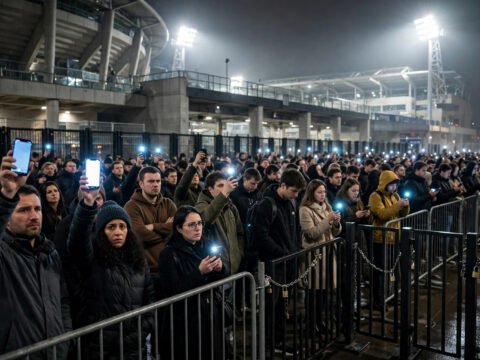
Some Americans are preparing regardless. Two Federal Emergency Management Agency officials, speaking anonymously to the Washington Post because they were not authorised to speak to the media, said they were concerned about the string of outages and were having trouble believing they were a coincidence. One said they took out extra cash; the other said former high school classmates kept asking whether they should prepare for an emergency. One official said: “There is nothing on this scale that has happened before in this many sectors this close together. This is scary, and there is no leadership.” FEMA did not respond to the Post’s request for comment. These are the private doubts of two anonymous officials, not evidence of coordination, and they sit alongside the on-record denials from the administration and the companies involved.
The buying is showing up in stores. Costco’s finance chief said shoppers had been buying more rice, canned goods, water, paper products, generators and batteries, with 21 of the 26 high-end generators sold online out of stock by the previous Sunday, according to a summary of the Daily Mail’s reporting. That figure is single-source and has not been independently confirmed. Against the anxiety, Mark Giles, director of Downdetector parent company Ookla Research, told Fortune there is nothing linking the outages: “This is a big blip, but it’s kind of on par for the course for what we’re seeing in terms of those longer-term trends. Most of the time they’re fairly self-contained and remedied quite quickly.”
The numbers behind the warning
Clayton also used the interview to argue that cyber threats are real and growing, even while the week’s outages were not attacks. “If you go back to 2020, there were almost 800,000 cyber incidents reported to the FBI. That is up to a million in the most recent data. And this is going to continue,” he said. That is a rise of roughly 25% from 800,000 to 1,000,000. These are FBI-reported cyber incident counts, not outage counts, and Clayton did not name the FBI’s report by name, so the numbers should be attributed to him, not to the FBI directly. The two claims must not be conflated: the threat landscape is growing, and the week’s outages were still separate technical failures.
The scale of the fix is large. Transportation Secretary Sean Duffy is requesting $50.1 billion from Congress, a request that includes funding to upgrade air traffic control systems and towers as well as some airports, according to Newsroom America. That figure is single-source and has not been cross-checked against a second outlet.
Should I worry about more outages over Thanksgiving?
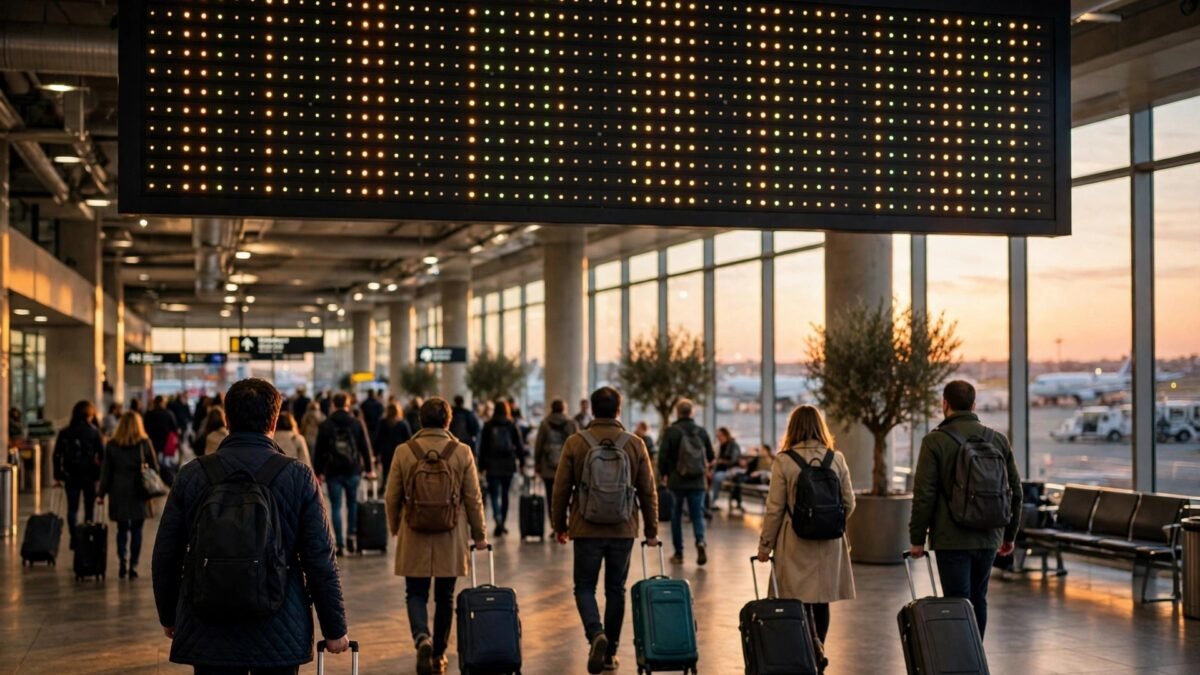
Clayton did not predict a specific Thanksgiving outage. But his message is that upgrade-related interruptions will keep happening, so our advice for travellers is to check flight status before leaving, keep boarding passes available offline, and carry a backup payment card in case a system goes down.
- Check your flight status before leaving for the airport, and check again before you board.
- Save your boarding pass and booking details offline, so a network outage cannot lock you out.
- Carry a backup payment card and some cash, in case card systems fail at the airport.
- Download maps and hotel details before you travel, rather than relying on a live connection.
- Keep your phone charged and carry a power bank, so you can rebook if systems go down.
- Do not panic-buy supplies on the basis of one warning; follow official guidance from the government instead.
These steps are our advice, not Clayton’s instructions.
What is still not settled
The six incidents in the wave each have their own stated cause, and no source has connected them: Microsoft blamed a network capacity upgrade; the FAA blamed a router upgrade; Chase blamed a software bug; United blamed an internal system outage; Apple blamed an internal update; and the NSA outage was routine maintenance and patching. More than 18,500 flights within, into or out of the US were cancelled between Friday’s halt and Monday, per FlightAware data cited by Al Jazeera and Newsroom America.
Two other stories are not connected to the wave and should not be folded into it. Delta’s weight-and-balance outage on Sunday 22 November, which delayed Atlanta-bound flights, is a separate incident with no sign of a cyberattack and no link shown to the wave. The FBI’s NCIC database breach is also separate, with no source linking it to the outages.
What to watch next
Three things will show whether the warning was prescient or just cautious. The first is Thanksgiving week itself: any further disruption to flights, banks or online services between now and Thursday 26 November will be read against Clayton’s warning. The second is Congress’s response to Duffy’s $50.1 billion request for air traffic control upgrades. The third is any disclosure of a cause for the wave’s individual incidents beyond the technical explanations already given, which would settle the question of whether the outages were really as separate as the administration says.