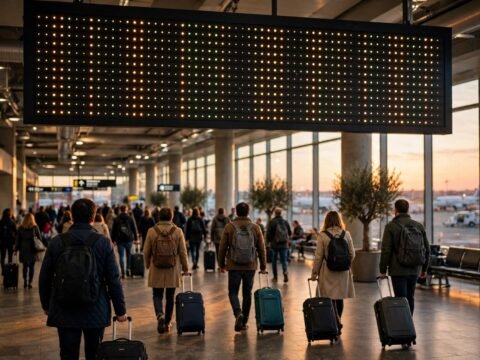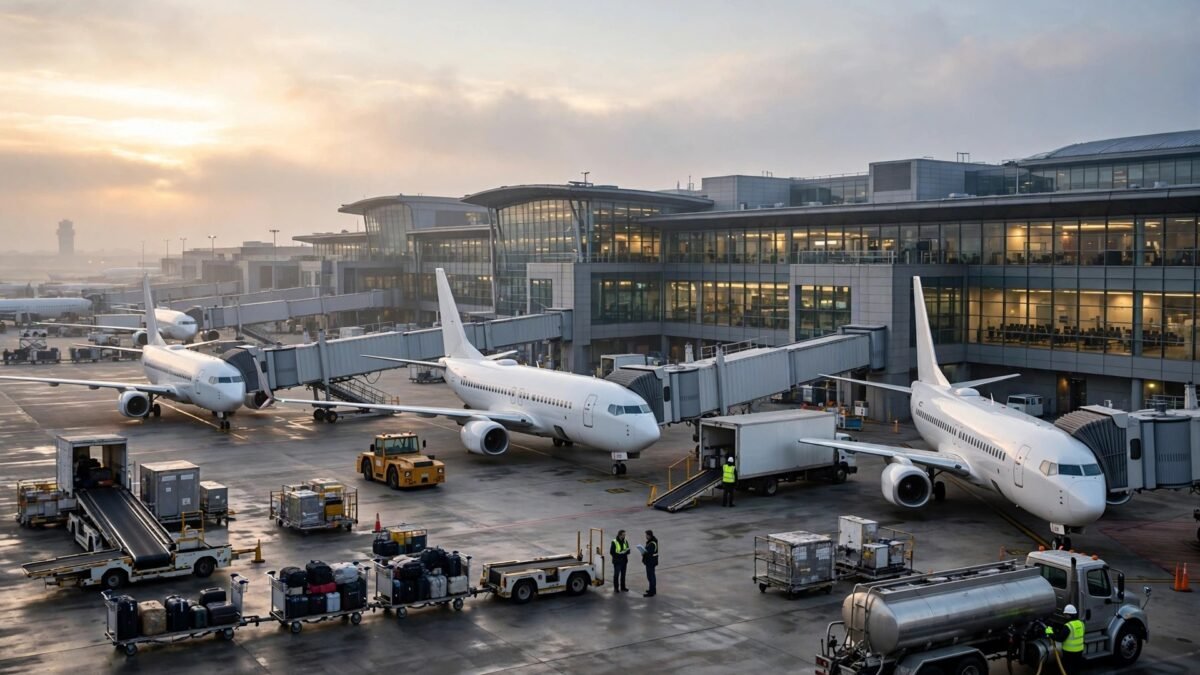
Delta Air Lines flights bound for Atlanta were held at their departure airports on Sunday morning, 22 November 2026, after the airline’s weight-and-balance automation failed. The Federal Aviation Administration issued a ground stop at Delta’s request, then downgraded it to a ground delay program shortly after 8:40 a.m. ET, letting flights resume under restrictions. By 11 a.m. ET, 681 flights were delayed at Hartsfield-Jackson Atlanta International Airport and 591 Delta flights were delayed nationwide, according to FlightAware. The disruption fell on the Sunday before Thanksgiving, with the holiday travel rush already underway.
Delta confirmed the problem and said its teams were using manual workarounds while work continued to restore the automation. Flights were still departing, but slowly. The airline has not said what caused the failure, and no restoration time has been given.
What broke, and why it grounded Atlanta
The failed system is Delta’s Automated Load Instruction System, known as ALIS. It handles the loading information used in aircraft weight-and-balance calculations. Every flight needs a final load sheet before departure, confirming total weight and centre of gravity after passengers, bags, cargo and fuel have been loaded. Those figures are then used to calculate takeoff performance, including the speeds pilots need and the engine thrust required.
When the automation fails, crews must complete the calculations by hand, adding time to every departure. At a hub as large as Atlanta, slower departures mean aircraft remain at their gates longer, leaving fewer spaces for arriving flights. Holding inbound Delta flights at their departure airports prevents aircraft from arriving in Atlanta without an available gate. Delta said it was working with air traffic control to protect airport gates and tarmac areas from congestion at its Atlanta hub.
The manual workaround was visible in the cockpit. In a recording from Boston Logan Airport, air traffic control told the pilots of Delta flight DL-2066 from Boston to Raleigh-Durham that the load control system had suffered a systemwide outage with multiple stations affected, and that the ramp was manually counting bags because there was no ramp worksheet. Delta’s statement, given to Simple Flying and to CNN affiliate WSB-TV, reads: “Delta teams are using manual workarounds this morning to safely get flights departed while work continues to restore automation. We thank our customers for their patience and our people for their professionalism.”
The morning in numbers
| Time (ET) | What the figures showed |
|---|---|
| Morning | FAA ground stop for Delta flights bound for Atlanta, at Delta’s request |
| Shortly after 8:40 a.m. | Ground stop downgraded to a ground delay program; flights resume under restrictions |
| 9:11 a.m. | Ground delay averaging 57 minutes, maximum 1 hour 51 minutes; no ground stop in force |
| Just after 9 a.m. | Nearly 400 flights delayed at Atlanta, according to FlightAware |
| 10:31 a.m. | Over 400 flights delayed at Atlanta |
| 11:00 a.m. | 681 flights delayed at Atlanta; 591 Delta flights delayed nationwide |
The tally kept climbing through the morning: nearly 400 flights delayed at Atlanta just after 9 a.m., over 400 by 10:31 a.m., and 681 by 11 a.m., with 591 Delta flights delayed nationwide. These are FlightAware tallies reported through the morning, and they were still moving at the time of writing, so treat them as a snapshot, not a final total.
Delays spread beyond Atlanta. Passengers reported significant delays at Newark, New York LaGuardia, Reagan National, Washington Dulles, Boston, Baltimore, Miami and Minneapolis, with Nashville, San Antonio and Birmingham also named, 11 airports beyond Atlanta in total. One figure should not be repeated as a delay count: the FAA warned that more than 3,500 flights would be affected by the ground stop and delay program. That is the scope of the advisory, not a count of flights actually delayed. The verified tallies were in the hundreds.
Three failures in nine days
| Date | What happened |
|---|---|
| Fri 13 Nov | FAA orders a nationwide ground stop of all departing flights after a telecommunications failure in its air-traffic-control system; the stop lasts more than four hours and FlightAware put delayed or cancelled flights at nearly 7,000 |
| Mon 16 Nov | United Airlines suffers a weight-and-balance system outage that stops departing flights across its network; resolved the same evening, around 6 p.m. ET, after more than 90 minutes; United never named a cause beyond a “technology issue” |
| Sun 22 Nov | Delta suffers a weight-and-balance outage in its Automated Load Instruction System; FAA ground stop for Atlanta-bound Delta flights, downgraded to a ground delay shortly after 8:40 a.m. ET |
Two of the three failures are the same failure mode, automated weight-and-balance calculations, at two different major US carriers six days apart. That is a pattern in what broke, not evidence of a shared cause. No source has shown a common vendor, system or attacker, and the 13 November failure had a different trigger, FAA telecoms rather than an airline system. There is no sign so far that Delta suffered a cyberattack. Delta has not disclosed what caused the failure, and the cause remains the open question.
The same Sunday morning also saw ground stops at LaGuardia in New York and George Bush Intercontinental in Houston, but those two were weather-related, low visibility, and are not connected to the Delta outage in Atlanta. This is also not the nationwide outage of 13 November, when an FAA failure halted departures across the country. Sunday’s problem is limited to one airline.
What should I do if I am flying Delta today?
Check your Delta flight status in the app or on the airline website before leaving for the airport, and expect delays even if your flight is not bound for Atlanta. Keep your booking reference handy for rebooking, and allow extra time at the airport.
- Check your flight status in the Delta app or on the airline website before you leave.
- Keep your booking reference ready, in case you need to change or rebook your flight.
- Allow extra time at the airport, because manual load calculations are slowing down every departure.
- Do not assume a delay means a cancellation; check the status again before you change plans.
- Save screenshots of your flight status and any messages from Delta, in case you claim later.
- Watch Delta’s own channels for a travel waiver, which would allow free changes to your booking.
These steps are our advice, not Delta’s instructions.
What is still unknown
Delta has not given a time for the weight-and-balance system to be fully working again. Whether any Delta flights were canceled is unclear: FlightAware figures cited in the morning showed no Delta services cancelled yet, and the eight cancellations listed at Atlanta were an airport-wide total, not attributed to Delta. No statement about the disruption had been posted on Delta’s news site as of Sunday morning, and no travel waiver for free changes had been announced. No verified passenger count exists, because the published figures are flight counts, not passenger counts. And the cause of the outage remains undisclosed.
What to watch next
Four things will fill in the gaps. The first is Delta confirming the automation is restored, and any restoration time. The second is Delta disclosing a cause, which would settle the cyberattack question. The third is a travel waiver from Delta for free changes. The fourth is the final FlightAware totals for delayed and canceled Delta flights once the ground delay program ends.