
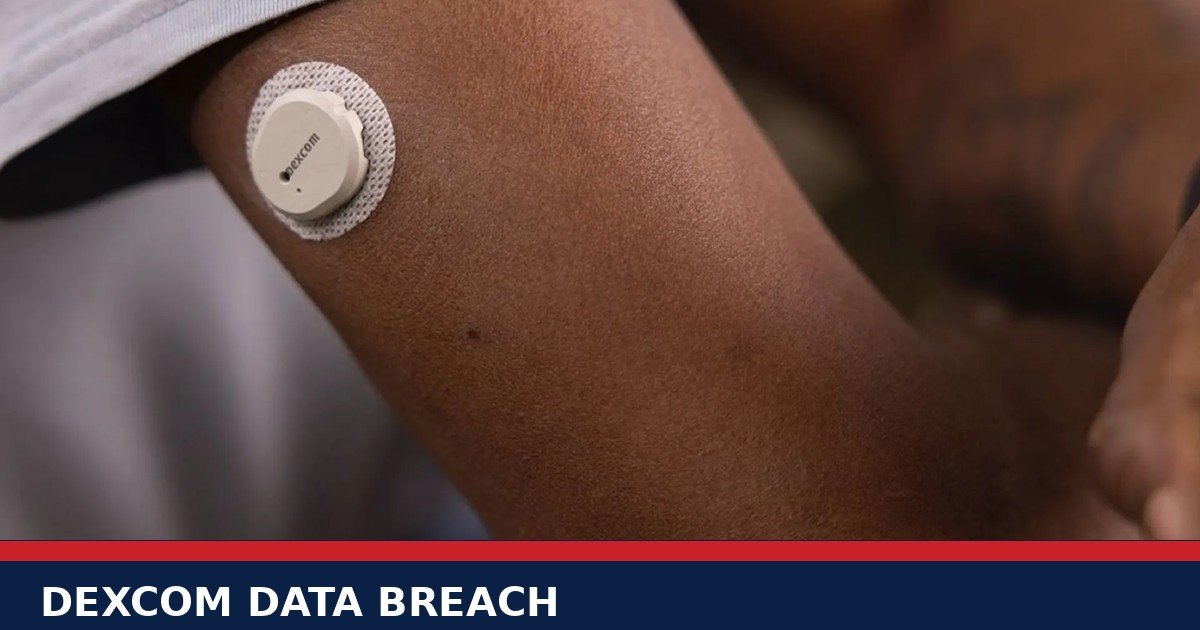
Dexcom data breach notices say Social Security numbers and health data may have been involved in a vishing attack, but the company has not said how many people are affected. Dexcom, the maker of continuous glucose monitors, filed two different breach letters with the California Attorney General on 13 November 2026. One version tells recipients one or more of the following may have been involved: their name, Social Security number, date of birth and government identification information. The other says health information may have been involved, including prescriptions, pharmacies, providers and diagnoses, and states it did not involve Social Security numbers, credit or debit card numbers, or other financial information. Dexcom says the incident is contained, its products remain secure and fully operational, and its investigation is complete. At least nine proposed class action lawsuits were filed against the company between 2 and 14 October 2026, a full month before the breach notices went out.
Two letters, two different exposures
Dexcom did not send one breach notice. It sent two, describing two different exposures with two different remedies, and it has not said how many people are in each group. The letters do not say who received which version.
Letter one, the identity-data version, says the information that may have been involved “includes one or more of the following: your name, Social Security number, date of birth, and government identification information.” Recipients are offered a free two-year identity monitoring membership through Kroll, covering credit monitoring, fraud consultation and identity theft restoration. Dexcom says it has “no indication that any of your information has been misused.”
Letter two, the health-data version, says the information may include “your name, address, and health information that could include your preferred pharmacy, your healthcare provider, your date of birth, prescription number, certain diagnoses, and other limited health information, such as an indication that you are a Dexcom user.” This version states the incident “did not involve your Social Security number, credit or debit card numbers, or other financial information” and does not offer the Kroll membership.
That split is the sharpest verified fact in the story. One group gets two years of monitoring because their Social Security numbers may have been exposed. The other group gets none and is told no financial data was involved. The undisclosed headcount in each group is the open question to press. Further state attorney general filings and any HHS report are the places a count would surface first. California’s public breach listing includes no count, and neither the letters nor the company’s statements give one.
The Dexcom data breach timeline: lawsuits came first
Cybernews reported ShinyHunters listed Dexcom on its data-leak site around Thursday 1 October 2026 and threatened to publish the data by end of day Friday 2 October unless the company contacted it. Cybernews reported the listing included no sample files, and Dexcom did not respond to a request for comment at the time. The first class action was filed on 2 October, the day after the listing. At least nine proposed class actions were filed in the U.S. District Court for the Southern District of California between 2 and 14 October 2026.
Dexcom’s first public statement came on Saturday 10 October 2026, nine days after the listing, saying it had “identified a cybersecurity incident that resulted in unauthorized access to limited information from certain internal documents following targeted vishing events.” On Monday 2 November 2026, Dexcom determined that some people’s information may have been involved in an incident involving unauthorised access to certain employee accounts. An unauthorised third party gained access through social engineering and downloaded certain files. Dexcom revoked the compromised accounts’ access and found no ongoing evidence of unauthorised activity.
The breach notices themselves were filed with the California Attorney General on Friday 13 November 2026, listing the breach date as 2 November. That is 43 days from the extortion claim to the breach notice, and the notices came a full month after the lawsuits began. Dexcom did issue a brief statement on 10 October, nine days after the listing, but it said nothing about whose data was involved. The notices, six weeks after the listing, were the first to say Social Security numbers may have been involved for one group and health data for another. Dexcom’s 12 November update added that “a small fraction of the impacted files contained personal information.”
One of the suits, Hart v. Dexcom, filed 13 October 2026, alleges weak data security let hackers steal personal and medical information, claims Dexcom violated HIPAA rules, and seeks compensatory and punitive damages. These are allegations. No court has ruled on them, no class has been certified, and there is no settlement.
What the attackers claim, and what Dexcom confirmed
Dexcom has not named who was behind the attack and has not said whether the ShinyHunters claim is the same incident it disclosed on 10 October. That link is unconfirmed, and this article does not present ShinyHunters as the confirmed attacker. A threat-intelligence account reported on 3 October 2026 that Dexcom had been removed from the ShinyHunters leak site, which could not be independently verified.
A second group, Redact, allegedly claimed Dexcom on its leak site on 10 October 2026, alleging it exfiltrated 3.3 TB of data. This is an attacker-side allegation only. Dexcom has not publicly confirmed it and no independent corroborating source confirms it. This article does not state a 3.3 TB theft as fact.
Dexcom’s November statement confirms internal documents ended up “on an illicit website” but does not say which group or site. The lawsuits allege the stolen data included names, dates of birth, driver’s license numbers, financial information, medical records and health insurance information. These are complaint allegations from before Dexcom sent any notices. Dexcom’s own letters do not mention financial information, and the health-data letter explicitly rules out Social Security numbers, credit or debit card numbers and other financial information. This article does not present the complaint’s data list as confirmed exposure.
No source confirms misuse of the exposed information. Dexcom says it has no indication the information has been misused. This article does not claim identity theft or fraud has resulted. No source confirms that Dexcom CGM devices, apps, glucose readings or customer account passwords were involved. Dexcom says its products are secure and fully operational.
What to do if you get a letter
The Dexcom data breach does not affect the devices themselves, so do not stop using your glucose monitor. First, read which letter you got: the two versions mean different things. If your letter mentions a Social Security number, enrol in the free two-year Kroll identity monitoring membership Dexcom offers and watch your credit reports. If your letter is the health-data version, watch for signs of medical identity theft: check your explanation-of-benefits statements and provider bills for services you did not receive. These are general precautions, not instructions from Dexcom.
The breach notices are mailed and list a Dexcom call centre at (844) 971-8641, Monday to Friday, 8:00 a.m. to 5:30 p.m. Central Time. Dexcom makes continuous glucose monitors, wearable sensors that help people with diabetes track blood sugar in real time, and says it has more than 2.8 million active customers in more than 100 countries. The company has not said how many of them are affected, so do not assume every Dexcom user was affected.
What happens next
Three things would change this story. A count, surfacing first in further state attorney general filings or an HHS report. A ruling on the class actions, or a class being certified. And any confirmation of who was behind the attack, whether ShinyHunters, Redact, or someone else entirely. Dexcom has said its investigation is complete and the incident is contained, so a count would surface first through the filings. Until then, the confirmed facts are narrow: a vishing attack on employee accounts, two different exposures, two different letters, at least nine lawsuits, and no victim count.


