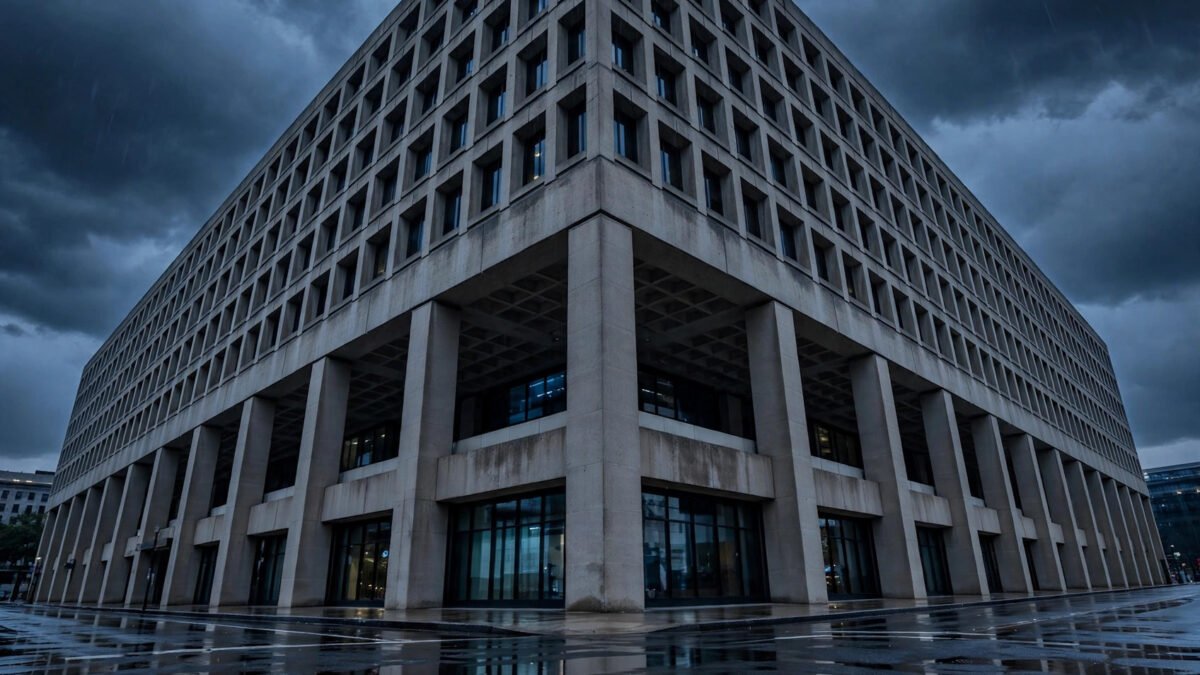
The FBI is investigating an apparent breach of its crime database
The FBI is investigating an apparent breach of its National Crime Information Center, the nationwide crime database that police departments use for warrants and background checks, according to CNN, which reported the story on Friday 20 November, citing two people briefed on the investigation.
Update, 21 November 2026: Reuters has now also reported the incident, citing CNN’s reporting — a second major outlet carrying the story. The FBI did not respond to Reuters’ request for comment, and still has not confirmed or commented on the reported intrusion. No attacker has claimed responsibility, and no data volume or scope has been reported.
CNN describes NCIC as “a lifeline between federal, state and local law enforcement”. The intrusion was discovered “in recent days”, CNN reports. The FBI did not immediately respond to CNN’s request for comment.
The timing is awkward for the bureau. On Thursday, after bureau officials learned of the latest incident, FBI Director Kash Patel appeared on Fox News to praise the FBI’s cybersecurity work, according to CNN. In that appearance Patel referred to Operation Winter Shield as if it was still in the works, CNN reports, though the operation was completed months ago, according to CNN. “Other administrations could have made these updates, but they didn’t. We are staying ahead of the curve and making up for lost time,” Patel said, according to CNN.
CNN places the discovery in a wider context. The Trump administration “has sought to assuage public concern about the nation’s cybersecurity amid a series of high profile outages affecting banks, the National Security Agency and the FAA’s air traffic control system”, CNN writes. TechReview covered all three this month: the NSA’s classified network was down for almost four days, Chase, Bank of America and Wells Fargo customers reported online banking problems, and the FAA ordered a nationwide ground stop after an air traffic control communications failure.
What NCIC is, and why this report is different
NCIC is the FBI’s computerized index of criminal justice information, run by the bureau’s Criminal Justice Information Services Division in Clarksburg, West Virginia. The FBI calls it the lifeline of law enforcement, an electronic clearinghouse of crime data that virtually every criminal justice agency nationwide can tap into, 24 hours a day, 365 days a year.
The scale is hard to overstate. NCIC launched on 27 January 1967 with five files and 356,784 records, according to the FBI. As of 2023, the bureau’s current description puts it at 22 files with more than 18 million active records, serving more than 100,000 criminal justice and law enforcement partners and averaging millions of transactions each day.
The 22 files split into seven property files, covering stolen articles, boats, guns, license plates, parts, securities and vehicles, and 15 persons files, including the wanted person, missing person, National Sex Offender Registry, known or appropriately suspected terrorist, gang, protection order, identity theft, violent person, NICS denied transaction, extreme risk protection order and threat screening center files. It is a criminal justice information index, not the National Instant Criminal Background Check System, though records of denied NICS transactions are among its files. An officer on a traffic stop can search NCIC to check whether a vehicle is stolen or a driver is wanted, and the system responds instantly. A hit does not by itself establish probable cause: NCIC policy requires the inquiring agency to contact the agency that entered the record and confirm it is accurate and up to date before acting.
That is what makes this report different from the two earlier FBI incidents this year. The September incident exposed employee records, in a sample journalists verified in part. The March incidents touched surveillance systems and the director’s personal email. NCIC is the system officers query while they are standing at a car window, in real time, every day. Whether anyone reached it, and what they could see if they did, is exactly what has not been confirmed.
Nine months, four reports: the 2026 pattern
CNN describes the reported NCIC intrusion as “the second such breach in recent months”. The first, by CNN’s own account in the same article, was the September attack on the FBI’s jobs website. The fuller 2026 record is longer, and it shows a pattern worth laying out in full. Each incident hit a different target, and the targets have moved steadily closer to the bureau’s daily work: from surveillance systems to the director’s personal email to the recruitment portal, and now, if the report is confirmed, to the operational crime database itself.
| When | What happened |
|---|---|
| 17 Feb 2026 | FBI begins investigating abnormal log information on an internal system holding surveillance returns |
| 4 Mar 2026 | FBI tells Congress it is investigating suspicious activity on the system; it holds pen register and trap-and-trace returns and personal data on investigation subjects |
| 27 Mar 2026 | Handala, a pro-Iranian group, publishes material it says came from Director Kash Patel’s personal email; a Justice Department official confirms to Reuters that the emails were compromised, and the FBI says the material was historical and involved no government information |
| 21-22 Sep 2026 | ShinyHunters claims to have breached FBIJobs.gov, saying it exploited an Oracle PeopleSoft flaw; the FBI says it is investigating unauthorised activity affecting the portal |
| 5 Oct 2026 | FBI says a contractor failed to apply a security patch and has been removed; Reuters identifies the contractor’s employer as Accenture |
| 8 Oct 2026 | A Canadian cybersecurity executive is arrested in Philadelphia on extortion charges; Nextgov/FCW reports the case may be linked to the ShinyHunters investigation |
| 20 Nov 2026 | CNN reports the FBI is investigating an apparent breach of NCIC, the nationwide crime database |
By our calculation, 276 days passed between 17 February, when the FBI began investigating abnormal log information, and the NCIC report on 20 November. The gap between the September intrusion, which began on the night of 21 September, and the November report was 60 days. March held two separate events that are often folded into one: the surveillance-system intrusion, which hit an FBI network, and the Patel email hack, which hit the director’s personal Gmail account. They are not the same incident, and the distinction matters. The email hack was embarrassing for the director. The surveillance-system intrusion and the jobs-portal breach both hit FBI systems. The NCIC report, if confirmed, would be the third FBI system hit this year.
The March surveillance incident began when the FBI spotted abnormal log information on 17 February on an internal system holding surveillance-related information. The bureau told Congress on 4 March that it was investigating suspicious activity on the system, according to the notification obtained by the Associated Press. The system is unclassified, but it holds law enforcement sensitive information, including returns from legal process such as pen register and trap and trace surveillance returns, and personally identifiable information on people under FBI investigation. The FBI said the techniques being used were sophisticated and included leveraging a commercial internet service provider’s infrastructure to slip past its network security controls. The FBI confirmed the incident in a statement but gave no further details. The Wall Street Journal reported, citing people familiar with the matter, that US investigators believe hackers affiliated with the Chinese government are responsible, though the scope and severity of the intrusion were not known and the investigation was in its early stages.
The Patel email hack came three weeks later. Handala, a pro-Iranian hacking group, claimed on 27 March to have hacked the director’s personal email account and published photographs, a resume and other personal documents, according to the Associated Press. Reuters first reported the breach. The FBI confirmed that malicious actors had targeted Patel’s personal email information and said it had taken all necessary steps to mitigate the risk. The material was historical in nature and involved no government information, the FBI said. Haaretz reviewed the full leaked archive, more than 300 emails spanning 2010 to 2022, and found the materials appeared authentic but contained no classified material. The FBI is offering a $10 million reward for information that leads to the identification of the Handala Hack Team, CNN reported. Ron Fabela, an independent cybersecurity researcher who reviewed the files with CNN, put it bluntly in CNN’s March reporting: “This isn’t an FBI compromise — it’s someone’s personal junk drawer.”
The September breach, in detail
The September incident is the closest parallel to the NCIC report, and it is the one with the fullest public record. ShinyHunters, an extortion group active since 2019, claimed on 22 September to have breached the FBI’s recruitment portal, FBIJobs.gov, and stolen personal data on nearly all current and former FBI employees and job applicants, according to 404 Media, which first reported the story.
According to the group, as reported by 404 Media, the intrusion began on the night of 21 September, when attackers exploited a server running Oracle PeopleSoft, used by FBI recruiters. The group said it then moved into FBI-managed Amazon Web Services GovCloud infrastructure. The group said it bypassed web application firewall rules using URL encoding, a technique Google’s Mandiant later confirmed in its own analysis of the PeopleSoft attacks. The jobs site was defaced and then taken offline. By 22 September it showed a maintenance notice, and it stayed unavailable the following day.
ShinyHunters said it had taken two to three terabytes of data from systems it named as HR, Medlink and Criminal Justice, including medical information. That volume is the group’s claim, not a confirmed figure. The group gave several news organisations a sample file with names, home addresses, phone numbers and relatives’ information for roughly 5,000 FBI employees, according to the outlets that received it. Nextgov/FCW, 404 Media and NBC News confirmed portions of it against public records or directly with people named in it. A Justice Department notification to lawmakers said the affected system held Social Security numbers, dates of birth, phone numbers, addresses and emergency-contact information. The notification described what the system held, not what was taken. Reuters reported that the exposed material included descriptions of named employees’ counterintelligence assignments, the street addresses of human-intelligence operatives, and medical and psychiatric records.
The FBI’s public response moved in stages. On 22 September the bureau said it was aware of claims about unauthorised activity affecting FBIJobs.gov and was investigating. The next day it said the point of breach was still undetermined. On 25 September the bureau emailed its workforce that it was operating on the assumption that data on all employees had been taken, and urged staff to report unsolicited contact. Officials told CNN the data could allow foreign intelligence services or criminal organisations to identify agents in sensitive roles, including those working on China and Russia.
On 28 September a ShinyHunters spokesperson told NBC News that the group would not publish the data and was withdrawing its demand, describing the episode as “a marketing campaign”. The group’s leak site went offline on 30 September. On 5 October, Brett Leatherman, assistant director of the FBI’s cyber division, said in a statement to Reuters that the incident “occurred as the result of a security failure of a platform managed by a third-party organization, after a contractor failed to implement a security patch explicitly issued to secure the platform”, and that the contractor had been removed. Reuters, citing two sources, identified the platform as Oracle PeopleSoft and the contractor’s employer as Accenture.
The wider investigation produced arrests. Dutch police arrested Pepijn van der Stap, a 24-year-old previously convicted hacker, on 15 September, six days before the FBIJobs intrusion. On 29 September, the FBI warned the group’s remaining members to “reach out first while the choice is still yours”, in a message from Leatherman. In early October, Reuters reported that a Jordanian known online as “Rey”, identified as Saif al-Din Khader, had been detained in Jordan and was cooperating with the FBI to identify other alleged hackers. On 8 October, FBI agents arrested a Canadian cybersecurity executive in Philadelphia on charges of conspiracy to extort by threatening to disclose stolen information; Nextgov/FCW reported the case may be linked to the FBI’s pursuit of ShinyHunters. On 21 October, the FBI launched a new recruitment website.
What is confirmed, and what is not
The NCIC report is less than a day old, and the gap between what is known and what is not is wide. Here is where it stands.
Reported by CNN, not confirmed by the FBI. CNN reported on 20 November that the FBI is investigating an apparent intrusion into NCIC, citing two people briefed on the investigation, and that the intrusion was discovered in recent days. The bureau has not commented publicly. What is established is the system itself: NCIC is the nationwide crime database police use for warrants and background checks, and the FBI describes it as the lifeline of law enforcement. The three earlier incidents are also on the public record, though confirmed in different ways: the March surveillance-system investigation was acknowledged by the FBI; the Patel email hack was confirmed by a Justice Department official to Reuters, while the FBI acknowledged malicious targeting; and the September FBIJobs breach was investigated by the FBI and reported by multiple outlets, with the bureau later attributing it to a contractor’s patch failure.
Not confirmed. No attacker or group has claimed responsibility for the reported NCIC intrusion. Nothing has been confirmed about what data, if any, was accessed, copied or taken from NCIC: no record count, no data volume, no sample has been reported. No detail has been confirmed about how those behind the reported activity got in, or whether NCIC operations or law-enforcement queries were disrupted at any point. Reuters has since reported the incident, citing CNN’s reporting; the FBI did not respond to Reuters’ request for comment either. The exact discovery date is unknown beyond CNN’s “in recent days”. None of this should be read as a link to the September ShinyHunters intrusion. No link has been reported, and the two incidents should be treated as separate until the FBI or another outlet says otherwise.
What to watch next
Whether the FBI issues a public statement on the NCIC incident, and what it says about scope and whether any data was accessed. Whether any attacker claims responsibility. Whether NCIC queries or law-enforcement access were interrupted at any point, which would be one sign of operational impact. Whether the bureau links the intrusion to the September ShinyHunters attack or states explicitly that the two are unrelated. And whether the investigation produces the kind of detail the September case eventually did: an entry method, a scope, and a name.
This article will be updated as the FBI confirms more, or as further reporting emerges about the reported NCIC intrusion.