Your Google results are about to look different
On October 15, Google announced a set of changes to how links appear in AI Mode and AI Overviews. The headline for regular users: the search giant will now show inline links higher up and more frequently in AI-generated answers, and it will prioritize articles from sources you have explicitly marked as preferred. If you have ever wished Google showed you more of the outlets you actually trust, this is the setting that controls it.
The announcement came via Google’s official blog, from Hema Budaraju, VP of Product Management for Search. It is part of a broader push Google frames as making AI search “simpler, more visual, and more engaging.” Publishers, who have watched their Google traffic crater over the past year, will read it differently.
What actually changed
Five things, per Google’s blog. First, inline links inside AI Mode and AI Overview responses now appear higher up and more often. Google says it has made “continued and substantial increases” to inline link presence, so sources are clickable right when you need them instead of buried at the bottom.
Second, Google is testing a dedicated section at the top of AI answers for the “one or two official places on the web” to complete a specific task, with added context explaining why each link is useful. Third, the article carousels for timely topics are rolling out to more locations and languages globally, and these carousels now highlight your Preferred Sources.
Fourth, the “Dive Deeper” links at the end of some AI responses get a visual redesign with image thumbnails. Fifth, Google is testing clickable creator and publisher names on video results in AI Mode, linking to their Search profiles.
Google also disclosed that use of the Preferred Sources feature has grown “by more than 7x since the start of the year.” In a separate announcement the same day, Google said 400+ publications are now in its News AI pilot licensing program, where Google pays for enhanced content.
How do I set my preferred sources in Google?
Preferred Sources is a Google Search setting that tells Google which outlets you trust. Once set, Google shows those sources more often in Top Stories, AI Mode, and AI Overviews when they publish fresh, relevant content. Setting it takes about two minutes, and the steps come straight from Google’s own help documentation.
- Go to google.com or open the Google app on your phone.
- Tap your profile picture or initial at the top right corner.
- Open Search personalization, then Source preferences.
- Search for the outlets you want, such as your favorite news sites.
- Check the box next to each source you want to prefer.
- Confirm your list under “Your sources” at the bottom of the screen.
Tip: if you read TechReview, search for “TechReview.si” and add us — you will see our cybersecurity guides and breach alerts more often in your results.
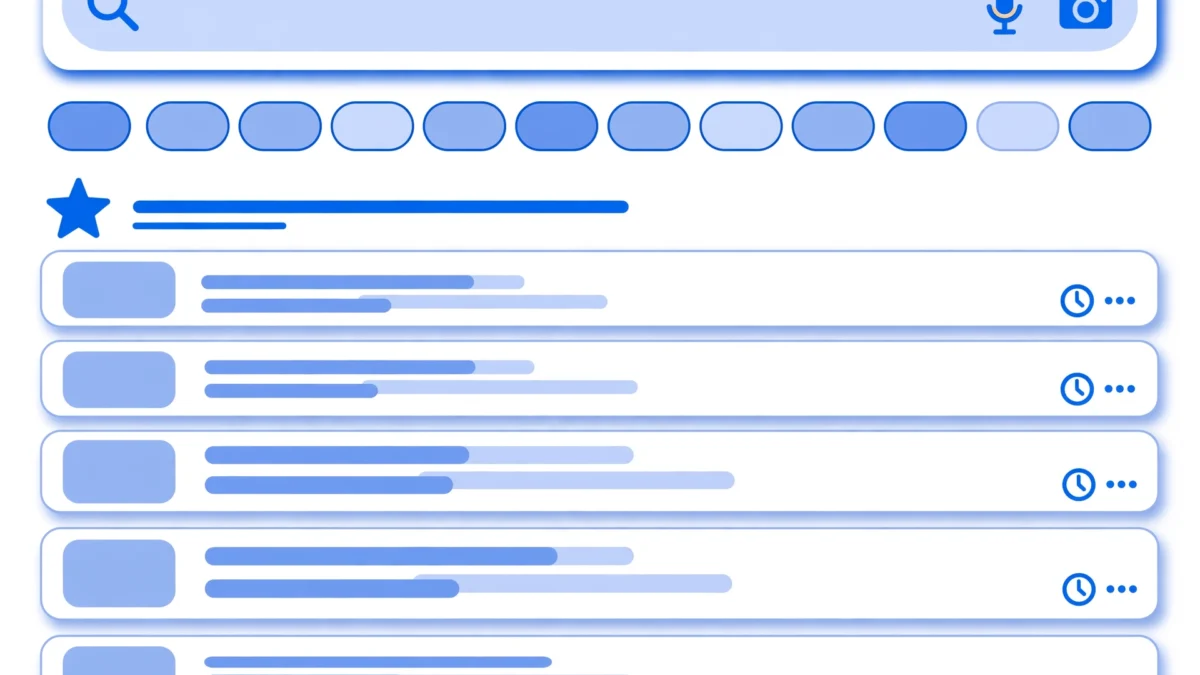
There is a second route through Top Stories. Search for a recent news event, and if a Top Stories section appears, click the star icon to the right of the “Top stories” header. Search for sources, check the boxes, and click “Reload results.” If you are signed in to your Google Account, your preferences follow you across every browser.
One caveat from Google: sources that are not updated regularly may not be available to select.
Why publishers are watching this closely
The timing is not accidental. According to a Chartbeat report cited across AFP wire coverage of the announcement, news publishers saw roughly a 40% drop in Google-driven traffic between July 2025 and July 2026. AI Overviews, which launched in May 2024, now reach over 2 billion monthly users across 200+ countries, per CEO Sundar Pichai’s Q2 2025 remarks. AI Mode followed in March 2025 with longer answers and more links.
For publishers, the Preferred Sources feature is a double-edged sword. On one hand, loyal readers who mark a publication as preferred will see it more often. On the other, the feature rewards outlets that already have a direct audience relationship, which is exactly what smaller publishers struggling with the traffic drop lack. In August 2026, France’s Apig newspaper group complained to the competition authority that AI summaries breached 2022 agreements with publishers.
Google’s framing is that these changes drive more engagement with the open web. Whether publishers see actual traffic recovery remains the open question.
What is still unclear
Several pieces are explicitly in testing, not fully rolled out. The top-of-answer section for task links, the clickable creator names on video results, and the global carousel expansion are all described by Google as tests or gradual rollouts. Preferred Sources also appears limited to Top Stories, AI Mode, and AI Overviews; Google’s help docs do not mention Discover, so your Discover feed likely will not change.
The practical takeaway for readers is simple: if there are outlets you trust, take the two minutes to mark them as preferred. In an AI-generated results world, that setting is one of the few levers you control.
Sources
- Google Blog, “More ways to connect with the web from Search,” by Hema Budaraju, October 15, 2026
- Google Search Help, “Preferred sources,” accessed October 16, 2026
- 9to5Google, October 15, 2026
- Search Engine Land, October 16, 2026
- The Straits Times via AFP, October 16, 2026
Disclosure: TechReview.si is an independent publisher affected by the traffic changes described in this article.