
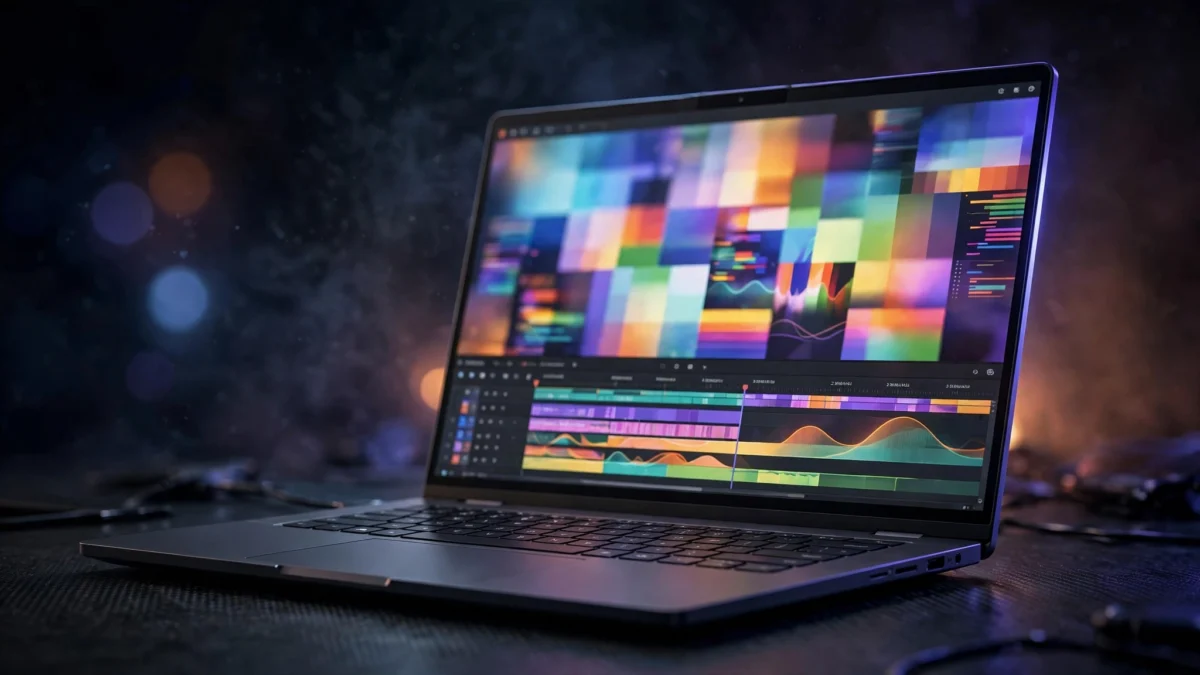
Microsoft wants your MacBook Pro. The Surface Laptop Ultra has been on pre-order since October 7 at $2,599.99, shipping October 16, and the Microsoft Store will hand you up to $1,000 cash back if you trade in a MacBook Pro to get one. That trade-in banner is not subtle. Neither is the machine: a 15-inch laptop running Nvidia’s RTX Spark N1X chip, with up to 128GB of unified memory and what Microsoft claims is up to 1 petaflop of AI compute.
This is the first Surface that reads like a direct answer to the 16-inch MacBook Pro instead of a cheaper alternative to it. The starting price undercuts Apple’s $2,999 16-inch Pro by $400 — with one asterisk: the Surface ships with 512GB of storage while the MacBook Pro starts at 1TB. Match the storage and the gap disappears, though the Surface’s user-replaceable SSD keeps self-upgrades cheaper than Apple’s tiers. The pitch is aimed squarely at developers and creators who run local AI models, edit video, or compile code for a living.
What $2,600 actually buys
The base config pairs the RTX Spark N1X (5,120-core Blackwell GPU, 18-core Grace CPU) with 24GB of unified memory and a 512GB SSD, running Windows 11 Home. Step up to the 6,144-core GPU and 20-core CPU and pricing starts at $3,699.99. The range tops out at $5,899.99 for a 128GB model that is already listed as out of stock.
Two things stand out beyond the chip. The mini-LED display is a touchscreen, which no MacBook offers, and Microsoft claims 25% higher peak HDR brightness than the M5 MacBook Pro. Then there is Magnetic Connect, which Microsoft calls the world’s first built-in magnetic USB-C charging on a laptop. The USB-C qualifier matters: Apple has shipped magnetic charging since 2006’s MagSafe, but through a proprietary port. Microsoft built the breakaway magnets into a standard USB-C port instead. Anyone who has tripped over a cable and watched a $3,000 machine slide toward the floor knows why that matters.
Ports are generous by 2026 flagship standards: three USB-C, one USB-A, HDMI, an SD card reader, and a headphone jack. Storage is user-upgradeable, which Apple abandoned years ago. At 4.41 pounds it is slightly lighter than the 16-inch MacBook Pro.
The catch: Windows on Arm
The RTX Spark is Arm-based, so this is a Windows on Arm machine. Native Arm apps fly. Everything else runs through Microsoft’s Prism emulation layer, which has improved but remains the asterisk on every Windows on Arm review ever written. If your workflow is Adobe Creative Cloud, DaVinci Resolve, or a stack of Electron apps, assume a compatibility check before you assume a speed win.
Battery life is the other open question. Microsoft is making big claims, but the one consistent edge Apple holds in every independent test is performance per watt. Until reviewers run the Ultra through real workloads, treat the battery numbers as marketing.
Who should switch, and who should wait 11 days
The honest buyer breakdown: if you are an AI developer who wants to run 120-billion-parameter models locally without paying cloud token bills (Microsoft claims on-device support above 120 billion parameters), this machine was built for you. Nothing Apple sells at $2,600 touches that. Windows-native creators and engineers who live in VS Code, Blender, or CAD software should take a serious look too.
Everyone else should pause. Apple is rumored to hold a second October event on the 27th with new MacBook Pros, including the first touchscreen model. Buying a $2,600 Windows machine eleven days before Apple shows its hand is a choice you should make deliberately, not accidentally. And if your life runs on Final Cut, Logic, or iMessage, no spec sheet closes that gap.
Microsoft’s trade-in math is worth doing honestly. Up to $1,000 back for your MacBook Pro sounds generous until you check what a recent 16-inch Pro fetches on the used market, which is often more. Get a quote both ways before you hand Apple hardware to Microsoft.
The Surface Laptop Ultra is the most interesting Windows laptop of the year, and the first one in a long time that competes with the MacBook Pro on ambition rather than price alone. Whether it competes on execution is a question for reviews, which should land as units ship October 16.