The Coborn’s data breach affected 239,574 people, Coborn’s told Texas regulators, after attackers removed names, Social Security numbers, prescription details and health insurance information from the Minnesota grocery chain’s network in a two-day intrusion in late 2025. People started getting letters about it on or about Friday 20 November 2026, 355 days after the intrusion began. The number comes from Coborn’s filing with the Texas Attorney General, as read by ClaimMoney, and a second tracker, breaches.fru.dev, reads the same filing the same way. Coborn’s own notice gives no total at all, which is why the count needs a closer look.
Coborn’s, Inc. is an employee-owned grocery and retail chain based in St. Cloud, Minnesota. It runs 77 grocery stores across six Midwest states, Minnesota, North Dakota, South Dakota, Wisconsin, Michigan and Illinois, under banners including Coborn’s, Cash Wise Foods and Hornbacher’s, plus fuel, liquor and pharmacy locations. The breach is a reminder that a supermarket can hold the kind of data usually associated with a hospital: the company held prescription information and health insurance policy details alongside names and Social Security numbers. Coborn’s has not said whether the people affected are customers, employees, or both.
The 355-day wait
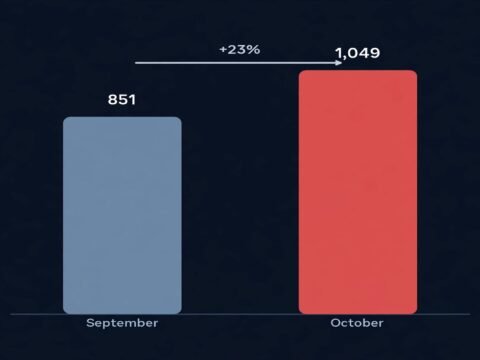
Attackers accessed Coborn’s network between Sunday 30 November and Monday 1 December 2025, according to Coborn’s notice, and removed a limited amount of personal information. The company’s investigation and document review concluded on Saturday 24 October 2026. Written notification began on or about Friday 20 November 2026. That is 355 days from the start of the intrusion to the first letters, and 327 days from the end of the intrusion to the end of the investigation. The scope review lasted about 164 times longer than the two-day intrusion itself. Only 27 days passed between the investigation concluding and notification starting, so the delay sits in the investigation, not in the mailing.
One date needs care. The Texas listing gives a discovery date of 24 October 2026, the same day the company says its investigation concluded. Coborn’s has not published a date for when it first discovered the access, so the two labels describe the same day from different angles and should not be read as the day the breach happened. The breach happened in late 2025. DataBreach Legal Team has already misread 24 October 2026 as the breach date, writing that the filing “dates the breach to October 24, 2026”. It does not.
A grocery breach that reads like a health-data breach
The data list is what makes this breach different from a typical retail incident. Full names, plus one or more of the following per person: date of birth, Social Security number, date of service, prescription information, and health insurance policy information. Which items were involved differs by person, and each recipient’s letter says which applied to them.
A name combined with a date of birth and a Social Security number is the core set of details criminals need to open accounts or file false tax returns. Prescription information and health insurance policy information add the risk of medical identity theft, in which someone uses a person’s insurance details to obtain care or file claims. Unlike a password, none of these details can simply be reset, so the risk can last for years. That is why the company is offering identity monitoring only to the people whose Social Security numbers were involved, and why the notice tells everyone to watch for medical identity theft as well as financial fraud.
Coborn’s says it is not aware of any reports of identity fraud or improper use of any information as a direct result of this incident. That describes what the company knows today. It does not rule out later misuse, and information that has been taken can be used long after a notice is sent. No ransomware group, threat actor, initial-access method, or dark-web leak has been reported, according to Undercode News, which lists all four as unconfirmed. The company’s notice does not describe how the intruder got in, who was responsible, or whether any ransom demand was made.
The count problem: 239,574, or 352?
The headline number rests on one filing, and it deserves a plain explanation. Coborn’s told Texas regulators that 239,574 people were affected in total, including 352 Texas residents, in report BR-0005547, published on the Texas Attorney General’s data breach report page on Monday 23 November 2026. Two independent trackers that read the same listing, ClaimMoney and breaches.fru.dev, agree on both figures.
But the company’s own notice states no total, and the Massachusetts filing states none either. Two other careful trackers list only the 352 Texas residents. ClassActionU, which reviewed the company notice and the Massachusetts filing, says no total number has been published. Undercode News, writing on 23 November, listed only the 352 Texans and marked the nationwide total as unconfirmed, because at that point it had only the state figure.
The conflict is explained by where each number lives. The total lives only in the Texas listing. The company notice and the Massachusetts filing genuinely state no total, so anyone reading only those documents will honestly report that no total exists. This article uses the 239,574 figure because two independent trackers read the same Texas filing and agree on it, and attributes it to that filing. If the Texas page is re-checked and shows only 352, the headline number must be corrected.
| Published count | People | Source |
|---|---|---|
| Texas residents | 352 | Texas Attorney General filing |
| Massachusetts residents | 13 | Massachusetts filing |
| Rhode Island residents | About 3 | Company notice |
| Published state counts, combined | 368 | 0.15% of the total |
| Total, per the Texas filing | 239,574 | Texas Attorney General filing |
The published state counts add up to 368 people, 0.15% of the 239,574 total. The other 239,206 victims sit in states that publish no per-state count in these trackers. The published counts come only from Texas, Massachusetts and Rhode Island, while the company’s 77 grocery stores sit in Minnesota, North Dakota, South Dakota, Wisconsin, Michigan and Illinois. The 13 Massachusetts residents come from Dapeer Law, which reviewed the Massachusetts filing. The Rhode Island figure, about three residents, comes from the company’s own notice.
What should I do if I got a Coborn’s breach letter?
If you got a Coborn’s breach letter, enroll in the free Kroll monitoring if your Social Security number was involved, then place a fraud alert or freeze with the three credit bureaus. Check your insurance statements for care you did not receive, and keep the letter. It lists which details were taken.
- Find your Coborn’s notice letter and note which data it says was taken from you.
- Enroll in the free Kroll monitoring at enroll.krollmonitoring.com before the deadline printed in your letter.
- Place a free fraud alert or a credit freeze with Equifax, Experian and TransUnion today.
- Review your health insurance statements for services you did not receive and report them to your insurer.
- Call Coborn’s response line at (844) 971-8619 on weekdays if you lost your letter.
What Coborn’s is offering
Coborn’s is offering complimentary identity monitoring through Kroll to people whose Social Security number was involved, with enrollment at enroll.krollmonitoring.com. The package includes credit monitoring, fraud consultation and identity theft restoration. The sample notice letter leaves the membership length and the activation deadline blank, so recipients must check their own letter for both. The notice was prepared with Kroll’s help, and Kroll is also providing the monitoring. A dedicated toll-free response line, (844) 971-8619, is open Monday to Friday, 8:00am to 5:30pm Central, for questions. The notice also recommends a one-year fraud alert, a security freeze, free credit reports, and watching financial account statements and credit reports for fraudulent or irregular activity.
What to watch next
Several law firms, including Cole & Van Note, Dapeer Law and Levi & Korsinsky, have opened investigations and are offering free case reviews. No class action has been confirmed and no settlement has been announced as of 23 November 2026, according to ClaimMoney. Whether a lawsuit is filed is the first thing to watch. The second is whether more states publish counts, which would test the 239,574 total. The third is whether Coborn’s or a regulator ever names an attacker, a method, or a leak. And the fourth is the health angle: ClaimMoney notes that its sources show no HHS report for this breach, which is notable given the prescription and insurance data involved, but that is not proof that no HHS filing exists.