Apple’s first foldable goes on sale this Friday, October 23. But if you did not pre-order one, you almost certainly will not walk out of a store with one. Pre-orders opened on October 16 and sold out within minutes in the US, with delivery estimates slipping to late January 2027 within hours. Apple retail staff were told there would likely be no stock for walk-in buyers on launch day.
And three days before launch, a separate question appeared that Apple has not publicly answered: a video posted October 20 shows the inner display above the hinge depressing and wrinkling under finger pressure, then snapping back smooth. GSMArena confirmed the footage, Notebookcheck independently described the same softness, and the original poster says it appears across multiple units. The iPhone Duo launch is therefore two stories at once: a sellout driven by thin supply, and a durability question arriving before most buyers have even touched the phone.
In brief:
- iPhone Duo goes on sale October 23 in 70+ countries, starting at $1,999, but pre-orders sold out within minutes and late orders slipped to January 2027.
- Apple retail staff were told to expect no walk-in stock on launch day; Apple’s site tells customers to check back October 24.
- An October 20 video shows the inner display is unusually soft above the hinge. GSMArena confirmed the footage and Notebookcheck independently described the same softness. Apple has not publicly responded.
- Inner-display damage repair costs $999 without coverage, against a $1,999 starting price.
When can you actually buy one?
Pre-orders opened Friday, October 16 at 5 a.m. Pacific, and the window closed fast. By about 8:30 a.m. Eastern that day, every US configuration showed a January 25 delivery date, with some slipping to January 29, according to the Economic Times and TIKR. Store pickup for October 23 disappeared during the same morning.
Apple described preorder demand as “exceptional by every measure,” in a statement cited by CNBC, and said it would keep accepting orders online. That statement is about demand, not a delay to the launch itself: the October 23 store date stands. What slipped is when a specific buyer gets a specific configuration.
For walk-in buyers, the reporting points the same way. MacRumors reported that Apple retail staff were told there would likely be no iPhone Duo stock for walk-in purchases on launch day and were instructed to discourage customers without pre-orders from visiting. Apple’s own site, meanwhile, tells customers to check back Saturday, October 24. The two attributions differ: the first is what staff were told, the second is what customers see.
India is in the first wave: the Duo goes on sale there October 23, starting at ₹2,99,900 for 256GB, according to KnowWiser and ITMunch.
Apple’s “Get Ready” pre-order flow, which opened October 12, offered 32 configurations: four storage sizes, two colors, and four carrier options. Trade-in credit runs $35 to $885 depending on the phone traded in. Carrier offers looked higher on paper, AT&T up to $1,200 and T-Mobile up to $1,000, but those are paid at least partly as monthly bill credits over the financing term, not as cash off on day one.
Resale prices already show the gap between supply and demand. A 2TB Night Sky model, Apple’s price $3,199, sold on eBay for $5,000, and a confirmed 1TB pre-order sold for $4,400 against Apple’s $2,599, according to ithinkdiff’s October 17 demand report. Paying a premium to a reseller is practically the only reliable way to hold one before 2027, and it carries the usual reseller risks: no Apple return window and no guarantee the listing matches the configuration.
What does $1,999 actually get you?
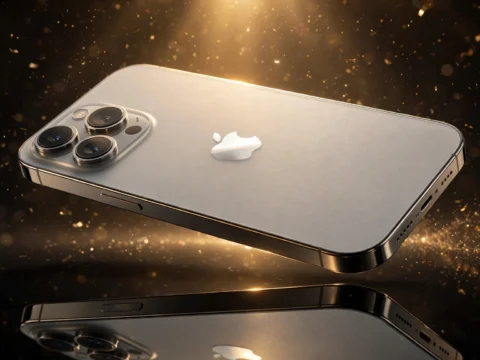
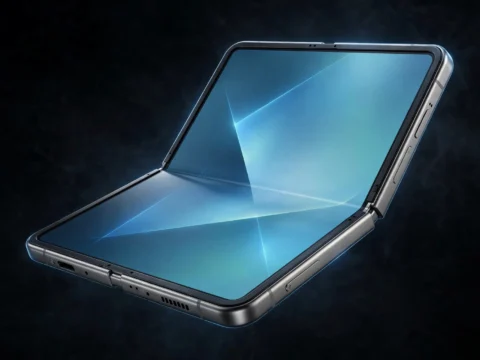
The Duo is a book-style foldable: a 7.6-inch Super Retina XDR inner display with a nano-texture finish (1,878 x 2,670) and a 5.4-inch outer display (1,398 x 2,034). Both run ProMotion up to 120Hz with Always-On and up to 3,000 nits peak outdoor brightness. Open, it is 5.2mm thick, the thinnest iPhone ever when unfolded; folded, it is 11.3mm and weighs 254g. The frame is Grade 5 titanium, the hinge has more than 100 precision components with titanium and carbon-fiber support plates, and the phone carries an IP68 dust and water rating.
It runs the A20 Pro chip, the same as the iPhone 18 Pro models, with Apple’s C2 modem and mmWave support in the US. It ships with iOS 27.1, which adds Split View, iPad-style sidebars, and a tent-mode Standby. It is not full iPadOS. The USB-C Apple Pencil, the $79 model, is supported, but only later in 2026, and the Apple Pencil Pro is not supported at all.
The trade-offs against the iPhone 18 Pro are where the $1,999 price needs the most scrutiny. This is the full list, and it is longer than the usual foldable compromises:
| Feature | iPhone Duo ($1,999) | iPhone 18 Pro ($1,199) |
|---|---|---|
| Telephoto camera | No (2x crop max) | Yes |
| Face ID | No (Touch ID side button) | Yes |
| Action Button | No | Yes |
| LiDAR | No | Yes |
| ProRAW / ProRes video | No | Yes |
| MagSafe wallet support | No (cases and chargers work) | Yes |
| AppleCare+ with Theft and Loss | $199.99/year | $149.99/year |
| Inner display repair (no coverage) | $999 | Not applicable |
| Battery service (no coverage) | $229 | $129 |
At the same storage, the Duo costs $800 more than the iPhone 18 Pro and $700 more than the Pro Max, according to a MacRumors comparison. The cameras are dual 48MP Fusion Main and Ultra Wide, with no dedicated telephoto. The inner under-display camera is limited to 1080p video with no Night mode and no portrait photography. Apple quotes battery life in hours only, up to 31 hours of video on the inner display and 44 hours on the outer, with about 50 percent charge in roughly 20 minutes. It does not publish a milliamp-hour figure.
Two finishes exist: Star White and Night Sky. The phone is eSIM-only worldwide, and Camera Control remains.
Is the screen durable enough?
Start with what hands-on coverage agreed on after the September event: the crease is minimized, not eliminated. The Verge found it almost impossible to detect by touch. Tom’s Guide could see it but not feel it. HardwareZone found it barely visible but feelable when running a finger across the screen. AppleInsider described an extremely slight dip with a strong center that does not flex when pushed. The variation across outlets likely reflects lighting and viewing angle, and HardwareZone’s hands-on coverage credits the nano-texture inner finish with both reducing glare and disguising the crease.
The October 20 finding is different from the crease debate. Weibo user Kang posted a video pressing a finger into the display strip above the hinge: the surface depresses, wrinkles under pressure, and snaps back smooth when released. GSMArena confirmed the footage and reported Kang’s claim that it shows up across multiple units. Notebookcheck independently described the screen as particularly soft above the hinge. Kang calls it basically universal, and a store contact who opened a second display unit got the same result. Some demo units also fail to close completely flush on one side, according to the same reporting.
Gizmochina characterizes the design choice this way: unlike Samsung’s Galaxy Z Fold8, which uses ultra-thin glass with a harder surface, the Duo uses a softer cover layer that is a separate part from the display panel itself: Apple lists that replacement at $49 without coverage ($19 with AppleCare+), against $999 for a full inner-display replacement. Combined with the hinge design, the screen feels especially soft right above the hinge. Untouched, the crease is barely noticeable on brand-new units. A dragged finger makes it visible and felt as a slight dip. A few customers have already received units early, according to Gizmochina and Notebookcheck, with unboxing videos circulating before the October 23 shipping date.
As of October 22, Apple has not publicly responded to the soft-display finding. That silence is costly for buyers: inner-display damage costs $999 without coverage, against a $1,999 phone. AppleCare+ with Theft and Loss at $199.99 a year changes that equation, but it is $50 a year more than the same coverage on Pro models. Early coverage began with controlled demonstrations at the launch event, and since then a few customers have received units early and posted unboxing videos. Battery life, camera performance, and long-term durability have still not been independently tested, and no independent folding-cycle test results exist yet. Anyone treating a first-generation premium foldable as equivalent to a mature line is getting ahead of the evidence.
Why is supply so thin?
The constraint is manufacturing, not just demand. Foxconn’s final-assembly yield was just over 60 percent as of September 17, according to Jiemian News as reported by MacRumors and AppleInsider on September 29. A Foxconn supply-chain source said it could take another six months to a year for the line to reach a mature yield. Samsung Display’s foldable OLED panels suffered low yield and late delivery, and Korean outlet ZDNet reported that the hinge is the part holding up production most. Apple weighed using liquid metal in some hinge parts before mass production, then settled on a different approach, according to MacRumors and AppleInsider; any material or process change forces suppliers to redo samples and validation.
One nuance is frequently lost in the yield coverage: the roughly 40 percent yield loss is not a consumer defect rate. Units that failed the yield bar were recalibrated, reworked, or re-checked before boxing, not shipped broken, according to Techaeris’s October 1 clarification. The yield problem means fewer finished phones, not broken ones reaching buyers.
Apple’s global stocking target for the Duo in 2026 is approximately 6 to 8 million units, according to Jiemian News, against a typical 20 to 30 million units over a full cycle for an individual iPhone Pro or Pro Max. Note the periods differ: the 6 to 8 million figure is the 2026 target, effectively the launch quarter of October to December, while the 20 to 30 million figure is a full product cycle. Analyst Jeff Pu cut his 2026 Duo shipment estimate from 7 million to 6 million units, blaming the hinge rather than demand, as reported by TIKR, and expects constraints to ease by the first quarter of 2027, as reported by Technobezz. Early output was limited to only a few hundred units a day in late August, Nikkei Asia reported on September 4, with production ramping up slowly from there.
TechReview analysis: Counterpoint Research expects Apple to sell about 6 million Duo units in 2026. The arithmetic here is illustrative, not a full-year forecast: the just-over-60 percent yield is a September 17 snapshot, and yield is expected to improve over the following 6 to 12 months, so applying 60 percent to the whole year would overstate the shortfall. It is also unclear whether the 6 to 8 million stocking target is already counted after yield. What the snapshot does show is this: at September’s pace, even 6 million finished units would have required starting roughly 10 million units, and failed units are largely reworked rather than scrapped, which slows output without producing defects. The January 2027 delivery slips are a supply story first and a demand story second.
Bloomberg’s Mark Gurman, as reported by ithinkdiff, has described the constraints as extraordinary, worse than Apple projected internally earlier in 2026, and reported that about two months before launch Apple thought the problems were severe enough that the phone could not go on sale until later in November, before pulling together enough inventory for an October release. The chain behind it is Foxconn for assembly, Samsung Display for the exclusive initial panels, Lens Technology for ultra-thin glass, and Amphenol and Shin Zu Shing for hinges (CINNO Research via Yicai, as reported by MacDailyNews).
Should you buy now or wait?
If you pre-ordered, your decision is made: your configuration arrives when it arrives, and the January dates are the current reality. If you did not, the practical options are narrow. Waiting for a walk-in unit on October 23 is unlikely to work, given what retail staff were told and Apple’s own check-back-October-24 message. Paying a reseller premium means paying $5,000 for a $3,199 configuration or $4,400 for a $2,599 one, with no Apple return window.
Waiting has two concrete upsides. First, independent durability evidence does not exist yet: no folding-cycle tests, no long-term battery measurements, and no Apple response to the soft-display finding. A buyer who waits gets that evidence before spending $1,999. Second, supply is expected to ease by the first quarter of 2027, according to Pu, which should shorten the wait and end the reseller premiums, though that is about availability improving rather than full yield maturity: Foxconn’s source put mature yield 6 to 12 months out from September, so availability can improve while the line is still ramping. A second-generation foldable is also expected in the second half of 2027, as covered in our iPhone 20 piece, which gives waiting buyers a second reason to hold off.
Buying now makes sense in one case: you accept the first-generation risks, you want the foldable form factor rather than the best camera or the lowest price, and you add AppleCare+ with Theft and Loss, because a $999 inner-display repair against a $1,999 phone is the one cost that changes the ownership math. For everyone else, the lower-risk move is to wait for independent tests and for supply to catch up, and to watch whether Apple responds to the soft-display finding before the first units reach most buyers.
Our earlier coverage of the announcement itself, including the India price and pre-order details, is in our iPhone Duo announcement piece. We will update this article as Apple responds to the display finding and as walk-in availability becomes clear after October 23.
Sources: Apple announcement via Business Wire (September 9, 2026); MacRumors; GSMArena; Notebookcheck; Techaeris; Gizmochina; Economic Times; TIKR; Counterpoint Research via Bloomberg; Jiemian News via MacRumors and AppleInsider; MacDailyNews (CINNO/Yicai); HardwareZone; AppleInsider; The Verge; Tom’s Guide; CNBC (demand statement); Nikkei Asia; ZDNet Korea via Free Press Journal; ithinkdiff; Bloomberg (Mark Gurman); Technobezz (Pu easing outlook).